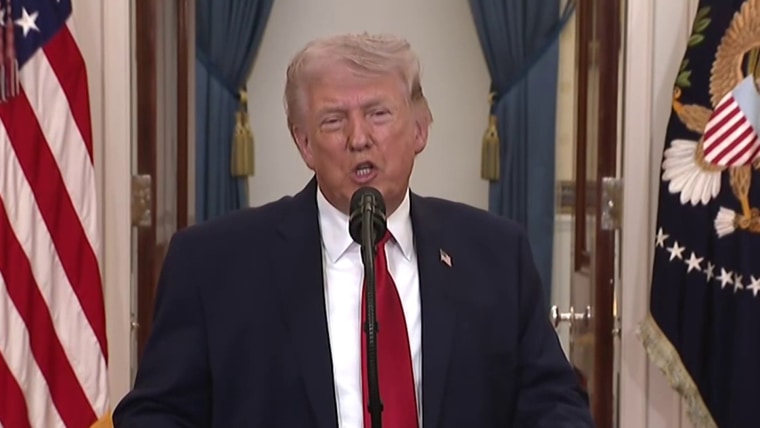
Former Virginia Gov. Glenn Youngkin signaled his political career may not be over, telling Sean Hannity he still has “more to give” just under three months after leaving office.
“I have more to give. I just do. The one year of campaigning and the four years of running, so five years, went by in five seconds. It was amazing,” Youngkin said on the “Hang Out with Sean Hannity” podcast.
In the full episode, debuting Tuesday, Youngkin sat down with the Fox News host to discuss his time in office, as well as what things have been like since his term expired in January.
NEW POLL REVEALS SPANBERGER’S POPULARITY IS PLUMMETING AMID BACKLASH OVER GERRYMANDERING
“Every morning [when I was governor], I woke up literally bounding out of bed, ready to roll, and that was the most purposeful I’ve ever felt in my whole life.“
Youngkin oversaw a range of conservative measures passed in the state, including a push to ensure age-appropriate curriculum in public schools.
SPANBERGER SIGNALS LEFT BENT AFTER CENTRIST CAMPAIGN; GOP LEADER WARNS OF ‘FAIRFAXING THE REST OF VA’
He also pushed for tax cuts, including efforts to reduce the state’s grocery tax, rolled back COVID-19 restrictions early in his tenure and emphasized tougher public safety policies.
His time in office concluded earlier this year, when Democratic Gov. Abigail Spanberger’s administration succeeded his.
“I’ve been out of office for six weeks. I took [my wife] Suzanne on vacation, which she so deserved. She’s been amazing. I think she’s one of the best first ladies in America,” he said.
“But six weeks has felt like six years… You’re chomping at the bit.”
While Youngkin stopped short of outlining specific plans for the future, his comments suggest he is keeping the door open to a return to public office.
Fox News Digital’s Charles Creitz contributed to this report.
Americans are getting smaller pay raises while tariffs and higher gas prices are threatening to make everything more expensive.
Subscribe to read this story ad-free
Get unlimited access to ad-free articles and exclusive content.
Translation: The affordability problem isn’t improving.
New government data released Friday showed non-supervisory workers getting a 3.4% pay raise on average hourly earnings over the last year. That’s the slowest pace of wage gains since 2021, and a downshift from the last two years, when pay bumps were closer to 4%.
The slowdown comes as economists worry about rising inflation, with the Iran war choking off oil tankers and pushing gas prices up over $1 per gallon in just a month, to a national average of $4.09 on Friday.
As diesel costs break $5.50 a gallon (compared to just $3.89 a month ago), retailers and grocers are now contending with higher transportation costs. Amazon said Thursday it will begin charging sellers a 3.5% “fuel and logistics-related surcharge” beginning on April 17.
Airlines like United and JetBlue are raising bag fees in an effort to offset sky-high jet fuel costs. The International Air Transport Association says the price of jet fuel is up 104% in the past month.
“With the recent uptick in inflation driven by energy prices, real wage growth is likely to decelerate further, putting increased pressure on consumers,” said Thrivent’s chief financial and investment officer, David Royal.
For now, Americans are still seeing their earnings rise at a faster pace than the increase in price tags at the store. As pay rose by 3.4%, the most recent inflation data showed prices rising by 2.4% year-over-year.
Wage gains for non-supervisory employees — a category that includes roughly four out of every five non-farm workers — have been outpacing price increases since March 2023, when post-pandemic inflation finally began to cool.
But the concern is that the story could change soon. Because of the bump from oil prices, Navy Federal Credit Union Chief Economist Heather Long said it’s possible inflation could pace at 4% this month.
“Four percent is above that 3.5 percent annual wage gain, and that’s where you see a lot of squeeze on workers, particularly middle-class and moderate-income workers,” Long said.
Warning signs are flashing that slowing wage growth could ripple beyond the gas station and prices at the grocery store. Higher mortgage rates now have some worried about icing out even more potential homebuyers.
The average 30-year fixed mortgage rate rose from 5.99% at the start of the war to 6.45% on April 3, according to Mortgage News Daily. The rise is due in part to concerns that the Federal Reserve will have to raise interest rates to tamp down on war-driven inflation.
“With choppy job growth, weaker labor-force attachment and rising uncertainty, many households — especially renters and first-time buyers — could become more cautious as weaker inflation-adjusted wages erode recent affordability improvements,” said Zillow senior economist Orphe Divounguy.
If wages can’t keep up with rising costs across the board, it’s likely that affordability will become a larger issue than it already was prior to the war. An NBC News poll conducted during the first week of the war with Iran found that, for a plurality of respondents, inflation and the cost of living was the most important issue facing the country.
Economists feel the same way.
Responding to a question from NBC News at a March 18 news conference, Federal Reserve Chair Jerome Powell noted that “real” wage gains — a measure of wages adjusted for inflation — need to be positive in order for Americans to feel better about affordability.
“it will take some years of positive real earning gains for people to feel good again, we think. But you’re right — when you talk to people, they do feel squeezed,” Powell said.
A party-line tactic to ram legislation through Congress and bypass the Senate filibuster has become a dumping ground for Republicans’ legislative priorities throughout the year.
Now, as Democrats refuse to fund immigration operations, Republicans are once again readying a budget reconciliation package. The hard part will be getting enough of the GOP on the same page to craft a bill that can pass and survive the strict rules underpinning the process.
Republicans used the same process to pass President Donald Trump’s “big, beautiful bill” last year. It’s a time-consuming, labor-intensive legislative maneuver that nearly blew up and could fail unless both the Senate and House align on what exactly they want to include.
SENATE PASSES BILL TO FUND MOST OF DHS AFTER HOUSE GOP CAVES
Trump officially backed using reconciliation again this week as a way to skirt Democrats’ refusal to fund Immigration and Customs Enforcement (ICE) and Customs and Border Protection (CBP), as Congress inches closer to ending the ongoing Department of Homeland Security (DHS) shutdown.
Trump demanded that Republicans get the bill on his desk by June 1.
“We are going to work as fast and as focused as possible to replenish funding for our Border and ICE agents, and the Radical Left Democrats won’t be able to stop us,” Trump said on Truth Social.
Still, Republicans have viewed reconciliation as a vehicle to tackle fraud, affordability, Trump’s tariff authorities, additional tax provisions, healthcare, funding for the Iran war, supplemental agriculture spending and election integrity measures in the months since passing the “big, beautiful bill.”
DHS SHUTDOWN BREAKTHROUGH COMES AT COST FOR REPUBLICANS AS FUNDING FIGHTS NEARS END
Senate Majority Leader John Thune, R-S.D., has warned that if reconciliation is going to work — especially given the limited timeframe lawmakers have to start and finish the process — Republicans need to “keep our expectations realistic.”
“Our theory of the case behind all this was to keep that thing as narrow and focused as possible, and that maximizes the speed at which we can do it and the support for it,” Thune said.
“There will probably be some attempts to add things,” he continued. “There are things out there that, obviously, many of us are interested in. But on a reconciliation vehicle like this — which we need to move with haste, as the president has pointed out — it’s probably not a likely magnet for all these other issues.”
Senate Budget Committee Chair Lindsey Graham, R-S.C., told voters at an event this week in South Carolina that he is eyeing two new reconciliation packages, which could ease concerns about cramming all the GOP’s priorities into one massive bill.
GOP RAILS AGAINST ‘S— SANDWICH’ DEAL AS ALL EYES TURN TO HOUSE TO END DHS SHUTDOWN
“We want to do it quick — ICE, Border Patrol — fund it as much as you can, multi-year,” Graham said. “Then there’s another one coming. I just made news. There’s another one coming in the fall, and that’s going to be about going after fraud.”
House Republicans spent their recent policy retreat earlier this year pushing a so-called “reconciliation 2.0,” gearing up to load the package with several provisions that could drain time and struggle to earn support in the Senate — where strict guidelines could kill proposals entirely if they don’t comply with the rules.
The Republican Study Committee (RSC), which has long called for a second reconciliation bill, also wants to add proposals addressing affordability concerns.
“We support pursuing funding for military readiness and Homeland Security through this legislative process, while simultaneously codifying the president’s agenda to deliver lower costs for working families,” the RSC Steering Committee said in a statement to Fox News Digital.
Some Republicans are also pushing to include the latest policy fight: the Safeguarding American Voter Eligibility (SAVE) Act. The voter ID and citizenship verification legislation has no chance of passing the Senate given unified Democratic opposition.
It’s also unlikely to survive the Senate’s reconciliation rules, which allow only provisions that directly impact spending.
“I think we have to set our sights a little bit lower on this reconciliation bill,” Sen. Roger Marshall, R-Kan., told Fox News Digital. “It’s got to be targeted to fund ICE for 10 years — I think that’s the number one thing for us. If we can nibble at the edges of the SAVE Act, that would be great, but the parliamentarian is not going to let us do the SAVE Act. That’s just an impossibility.”
Some of the loudest proponents of the bill in the House GOP acknowledge that adding the SAVE Act to reconciliation would be a challenge — largely because they would prefer to keep the bill intact and push it through the Senate.
“Look, it’s time for them to do a walk-and-talk and filibuster, and let’s make this thing happen,” Rep. Ralph Norman, R-S.C., said. “The American people are watching — piecing it together just to try to get a piece.”
President Donald Trump has endorsed Steve Hilton in the California gubernatorial race.
“I have known and respected Steve Hilton, who is running for Governor of California, for many years. He is a truly fine man, one who has watched as this once great State has gone to Hell,” Trump wrote in a Truth Social post about Hilton, a former Fox News host, on Monday.
“Gavin Newscum and the Democrats have done an absolutely horrendous job. People are fleeing, crime is increasing, and Taxes are the highest of any State in the Country, maybe the World. Steve can turn it around, before it is too late, and, as President, I will help him to do so! With Federal help, and a Great Governor, like Steve Hilton, California can be better than ever before! Steve Hilton has my COMPLETE & TOTAL ENDORSEMENT. He will be a GREAT Governor and, importantly, WILL NEVER LET YOU DOWN!!!” the president declared in the post.
VANCE ANTI-FRAUD TASK FORCE SUSPENDS 221 CALIFORNIA HOSPICE AND HEALTHCARE PROVIDERS SO FAR
Fox News Digital reached out to Hilton’s campaign and to Gov. Gavin Newsom’s office on Monday.
Hilton, a Republican, is running in a crowded jungle primary that includes candidates from both sides of the political aisle.
The top two candidates in the June 2, 2026, primary will advance to the general election.
Some of the Democratic candidates seeking the governorship include Biden-era Health and Human Services Secretary Xavier Becera, Rep. Eric Swalwell and former Los Angeles Mayor Antonio Villaraigosa.
MEDIA PERSONALITY STEVE HILTON ENTERS CALIFORNIA GUBERNATORIAL RACE
Trump’s full-throated endorsement of Hilton may hurt Riverside County Sheriff Chad Bianco, who is one of the other Republicans running for the role.
Hilton and Bianco had been the top two contenders in some public opinion polls, giving Republicans hope that no Democrat would finish in the primary’s top two positions.
That scenario may be less likely now, as Hilton’s support is likely to rise and Bianco’s drop in light of the president’s endorsement.
“Trump kills any GOP hopes of an R vs R runoff in the California governor’s race,” Rob Pyers of California Target Book wrote in a post on X regarding the president’s endorsement of Hilton.
“Trump’s endorsement of Steve Hilton likely frees up tens of millions of dollars for Democratic groups who would have otherwise had to spend heavily to elevate one of the two leading GOP gubernatorial candidates to avoid a Democratic lockout,” Pyers wrote in another post.
BIANCO SAYS ‘DEMOCRAT POLICY IS INDEFENSIBLE’ AS GOP CANDIDATES TOP CALIFORNIA GOVERNOR POLLING
Hilton became a U.S. citizen in 2021, and renounced his U.K. citizenship in 2025, he noted during an interview with GB News.
President Donald Trump says the war with Iran is “nearing completion,” but a looming deadline could determine whether the conflict is actually ending — or about to escalate.
“We are going to finish the job, and we’re going to finish it very fast. We’re getting very close,” Trump said Wednesday night, adding that U.S. forces will “hit them extremely hard over the next two to three weeks” and “bring them back to the Stone Ages, where they belong.”
As the war enters what analysts describe as its final phase, the administration is signaling a shift from broad military gains to a narrower endgame — raising questions about what “finishing the job” actually means militarily and politically.
Trump gave Iran until Tuesday to reopen the Strait of Hormuz, warning that failure to comply could trigger sweeping strikes on the country’s energy infrastructure.
TRUMP PAUSES IRAN ENERGY PLANT STRIKES FOR 10 DAYS AS TALKS ‘GOING VERY WELL’
“If no deal is made … we are going to hit each and every one of their electric-generating plants, very hard and probably simultaneously,” he said.
“With a little more time, we can easily OPEN THE HORMUZ STRAIT, TAKE THE OIL, & MAKE A FORTUNE. IT WOULD BE A ‘GUSHER’ FOR THE WORLD???” he said on Truth Social Friday.
The U.S. has already begun expanding its target set to include major infrastructure. This week, American strikes hit one of Iran’s largest bridges — a critical transportation artery — signaling that mixed-use infrastructure supporting military logistics is now firmly on the table.
“The biggest bridge in Iran comes tumbling down, never to be used again — Much more to follow!” Trump wrote on Truth Social. “IT IS TIME FOR IRAN TO MAKE A DEAL BEFORE IT IS TOO LATE.”
That raises a central question heading into the final weeks: what, exactly, would “finishing the job” look like?
Military analysts say it is unlikely to be a single decisive strike. Instead, the endgame may unfold as a series of escalating options — from intensified attacks on Iran’s remaining missile and drone network, to broader strikes on infrastructure designed to force the regime into a deal, or a longer-term strategy of containing Iran’s capabilities from above.
“We will continue to see very aggressive attrition of offensive and defensive targets, as well as infrastructure targets,” said RP Newman, a retired Marine ground combat veteran and counterterrorism consultant.
Some critics doubt that Trump has a clear exit strategy.
Trump’s public address Wednesday “was a summary, somewhat in chronological order, of things he’s already said on social media for the last month — and that, in and of itself, reveals that he doesn’t have a plan,” said Trita Parsi, a geopolitical analyst with the Quincy Institute, on X. “I think he wants to get out of this war. I just don’t think he knows how.”
Rather than winding down, Newman said, the U.S. may still be expanding its options. “That gives the President more options, and it gives the enemy an additional problem set to ponder.”
He also cautioned that Iran retains significant capability despite weeks of strikes.
“Iran likely has more missiles and drones remaining in their inventory than some people in organizations think or are claiming,” Newman said.
Recent U.S. intelligence assessments cited by CNN suggest that roughly half of Iran’s missile launchers remain intact and thousands of drones are still in its arsenal.
Behnam Taleblu, a senior fellow at the Foundation for Defense of Democracies, said the likely objective now is to “degrade and defang the regime of its long-range strike capabilities and prevent it from being able to pose a threat abroad.”
That effort, he said, would focus not just on weapons, but on the systems that sustain them.
“The regime’s bases that house these missiles and drones need to be targeted and collapsed … as well as the domestic supply chain and defense industrial base that supports these projectiles,” Taleblu said.
At the same time, the administration appears to be signaling limits to how far it will go.
Trump has suggested the U.S. may rely on continuous surveillance of Iran’s nuclear sites rather than launching new strikes or sending in ground forces to seize enriched uranium — a strategy Taleblu described as “watching them like a hawk.”
WHY TRUMP’S WAR SPEECH FAILED: DECLARING VICTORY BUT STILL BOMBING IRAN BACK TO THE ‘STONE AGES’
The influx of thousands of new troops from Marine Expeditionary Units and the 82nd Airborne Division in recent weeks has fueled speculation that the U.S. may be eyeing a ground operation to seize Kharg Island or recover Iran’s nuclear stockpile — estimated at more than 400 kilograms of highly enriched uranium — believed to be entombed deep within the Isfahan tunnel complex since the U.S. first collapsed its entrances in June 2025.
That approach could allow Washington to step back militarily while maintaining pressure, but it risks leaving key elements of Iran’s nuclear program intact.
“Keeping this material relatively accessible for the regime will mean that this will be a problem that the U.S. will be coming back to,” Taleblu said.
Trump also has signaled that, even as the U.S. pressures Iran to reopen the Strait in the short term, it may not pay a role in securing global energy flows, shifting more responsibility to allies.
“To those countries that can’t get fuel… go to the Strait and just take it. Protect it. Use it for yourselves,” he said.
Still, whether the war can truly be “finished” within Trump’s timeline remains uncertain.
Iran is believed to retain portions of its missile and drone arsenal, and analysts warn that even a degraded regime could continue to pose a threat — particularly if key capabilities survive the current campaign.
What happens next may depend on whether the pressure applied in the coming days — especially ahead of the April 6 deadline — is enough to force an outcome.
Tax season is stressful enough, but avoidable mistakes can turn a routine filing into an expensive headache.
With Tax Day just 10 days away, even small errors can mean the difference between a smooth refund and frustrating delays. In some cases, they can even trigger IRS notices or unexpected penalties.
Here are five common filing missteps to watch out for and how to avoid them:
1. Choosing the wrong filing status
Your filing status is one of the most important choices on your tax return because it helps determine your tax rate, your standard deduction and which credits you may be eligible to claim. Pick the wrong one, and you could end up paying more than you owe, getting a smaller refund or triggering delays if the IRS flags the return for review.
For many taxpayers, the confusion comes from life changes that happened during the year, like getting married or divorced, having a child, moving in with a partner, supporting an aging parent or sharing custody. Even if your situation feels straightforward, the IRS rules can be less intuitive, especially for taxpayers who aren’t sure whether they qualify as “head of household” or whether they can still file as “qualifying surviving spouse” after a spouse has died.
RETIRED? HERE’S WHEN THE IRS MIGHT TAKE A CLOSER LOOK AT YOUR FINANCES
Head of household, in particular, can be costly to get wrong. It typically comes with a larger standard deduction and more favorable tax brackets than filing as single – but it has strict requirements tied to paying more than half the cost of keeping up a home and having a qualifying dependent. If you don’t meet the rules and claim it anyway, you may have to pay back tax benefits later, plus penalties and interest.
When in doubt, the IRS has an online filing-status tool, and many tax software programs will walk you through the questions to help you choose the right category.
2. Leaving credits on the table
One of the biggest and most expensive tax-season mistakes is failing to claim every credit or deduction you qualify for. That can mean a smaller refund or a higher bill.
“I think the top mistake people make is not fully understanding or taking the time to really research what are all the different deductions and the ways that you can put a little bit of extra money in your pocket that are available to you,” said Bill Sweeney, senior vice president of government affairs at AARP.
AVERAGE TAX REFUND TOPS $3,700 MIDWAY THROUGH FILING SEASON, TREASURY SAYS
Sweeney also warned taxpayers not to rely on last year’s return as a blueprint for filing because of recent changes to the tax code from the One Big Beautiful Bill Act.
“This would be a good year given that there are these changes to the tax code, to make sure not to assume that what you did last year will convey over to this year. Really take a fresh look at your tax situation and see if there’s money that you’re leaving on the table,” he said.
3. Missing key deadlines
An extension can buy you time to file your paperwork, but it doesn’t give you extra time to pay. For most taxpayers, the IRS deadline to pay what you owe is April 15, 2026 – even if you request an extension to file later.
“Remember that even if you claim an extension, the money is owed on April 15,” said Mike Faulkender, co-chair of American Prosperity at the America First Policy Institute.
WHAT TRUMP’S NEXT PICK TO LEAD THE FEDERAL RESERVE MEANS FOR YOUR WALLET
Faulkender, a former Treasury official and IRS commissioner, said taxpayers who need more time should still estimate their bill and pay by the filing deadline to help avoid added costs.
“You have to actually send in a check or have the payment deducted from your account by the filing deadline,” he said.
If you can’t pay in full by April 15, pay what you can to help limit penalties and interest on top of your tax bill.
4. Entering bank account details incorrectly
If you choose direct deposit for your refund, the IRS relies on the routing and account numbers you provide. One wrong digit can lead to delays.
If you pay what you owe by direct debit, incorrect banking details can also lead to a rejected payment and potentially result in penalties and interest.
5. Filing before all your tax forms arrive
Timing matters when it comes to filing your taxes. Submitting your return before you’ve received all your key paperwork, like W-2s or 1099s, can lead to errors, missing income or a return you have to amend later.
Faulkender said there’s a simple way to double-check what’s been reported under your name before you file.
“One of the things that I learned last year when I was IRS commissioner, was that if you create an account on irs.gov, you can see everything that’s been filed under your tax ID,” he said.
“We’re supposed to receive all of our W-2s and our 1099 forms in the mail in January and February. But if you’re missing one, or you misplaced it rather than requesting it again, you can actually go and see what was filed under your taxpayer identification number if you create an account on IRS.gov.”
Filing late can also cost you extra money, especially if you owe. The goal is to wait until you have what you need, then file as soon as you’re ready.
The Trump administration filed an emergency motion to restore White House ballroom reconstruction, warning “time is of the essence” and saying President Donald Trump and his staff’s “security and safety” are at risk by the judge’s “untenable” ruling.
In the filing, Justice Department lawyers said the partially built project includes “deep Top Secret excavations, foundations, and structures” that must be completed quickly to protect sensitive construction and security features from exposure.
“This order is untenable and must be stayed in that the building is under construction, with deep Top Secret excavations, foundations, and structures, already built, and ready to receive heavily fortified, for security reasons, steel, bullet, ballistic, and blast proof glass, and drone proof roofing materials, which must be finished quickly, and not allowed to be exposed to the conditions and elements of an open construction site,” Friday night’s motion urges.
“Time is of the essence!”
JUDGE WARNS TRUMP ADMINISTRATION AGAINST ‘IRREVERSIBLE’ WHITE HOUSE BALLROOM CONSTRUCTION WORK
The appeal asks the U.S. Court of Appeals for the D.C. Circuit to stay U.S. District Judge Richard Leon’s order halting the project, which Leon ruled cannot proceed without congressional approval.
The administration argues the judge himself acknowledged that work needed to secure the White House grounds and protect the president and staff can continue.
“In granting this shocking, unprecedented, and improper injunction, one that could have been sought long ago, prior to the start of construction (in that there was full knowledge, through large scale media attention and publicity, that the White House ballroom was planned to be built, and there would have been a great deal of time for them to object, long before the start of construction, even though their objection would likewise have been baseless and frivolous), the district court took the erroneous, sweeping view that Congress did not authorize the ballroom construction at the White House — yet correctly allows construction ‘necessary to ensure the safety and security of the White House and its grounds, including the ballroom construction site, and provide for the personal safety of the President and his staff,’” the DOJ argued.
WHITE HOUSE FIRES BACK AT CRITICS CALLING TRUMP’S MASSIVE ARCH ‘TOO BIG’
Also, the lawyers wrote, the judge ignored the administration’s overtures to have him visit the site to see the privately funded $400 million project.
“The judge was given an opportunity to see the construction taking place at the site, but surprisingly, never responded to our invitation,” Trump Assistant Attorney General Brett Shumate wrote.
Preservationists challenging the construction say the administration unlawfully bypassed federal review and authorization requirements, but the DOJ rejected the judge’s claims that congressional approval is needed for a privately funded ballroom.
WHITE HOUSE TOUTS TRUMP’S ‘BOLD VISION’ FOR TOWERING INDEPENDENCE ARCH FOR AMERICA 250
“For decades, Congress has vested the President with overlapping statutory authorities that allow the President to make the improvements he deems necessary to White House grounds and structures,” Shumate wrote. “Yet, a district judge ordered the President to halt ongoing reconstruction of the East Wing of the White House by April 14, leaving a massive excavation and structurally completed site adjacent to the now open and exposed Executive Mansion and threatening grave national-security harms to the White House, the President and his family, and the President’s staff.”
“Almost 400 Million Dollars of private donations and contributions (No taxpayer dollars are being used to build this long sought, and desperately needed, ballroom!) have already been committed, or spent, in the purchase of heavy, large scale, and other types of building materials. The path to this injunction confirms its unfairness, untenability, and danger to the White House and the people working and living within its walls,” he added.
TRUMP PAUSES OIL EXEC SUMMIT TO PEEK AT WHITE HOUSE BALLROOM’S PROGRESS
The new motion filed by the National Park Service said the federal district court lacks the constitutional authority “to entertain this suit, which rests on a single pedestrian’s subjective architectural feelings.”
The initial lawsuit against the construction was brought by the National Trust for Historic Preservation, a nonprofit organization, alleging Trump exceeded his authority when he razed the historic East Wing and launched construction on the new building.
Friday’s motion argues the claims are “legally baseless” and “no Trust member has standing.”
TRUMP ADMIN DEFENDS WHITE HOUSE BALLROOM AS NATIONAL SECURITY MATTER
“The President has complete authority to renovate the White House,” Shumate concluded.
The East Wing was originally built in 1902 and expanded four decades later during Franklin D. Roosevelt’s presidency.
The ballroom is part of Trump’s broader push to reshape Washington’s monumental core, which also includes plans for a 250-foot (76-meter) arch and changes at the Trump Kennedy Center.
TRUMP ADMIN FIGHTS IN COURT TO KEEP WHITE HOUSE EAST WING DEMOLITION, $300M BALLROOM BUILD ON TRACK
“I would like to thank the hardworking Commissioners and Staff of the National Capital Planning Commission, who just voted overwhelmingly, 8-1, to approve the magnificent White House Ballroom now rising on this Hallowed Ground,” Trump wrote Thursday night on Truth Social.
“I am pleased to announce that even Board Member Senator Rand Paul, known as an extraordinarily difficult vote, voted a strong YES,” Trump said. “For more than 150 years, every President has dreamt about having a Ballroom at the White House to accommodate people for Grand Parties, State Visits, and even, in the Modern Day, Inaugurations.”
WARREN-LED INQUIRY DRAWS NEW DETAILS ON TRUMP BALLROOM DONATIONS FROM MAJOR CORPORATIONS
“I am honored to be the first President to finally get this much-needed project, which is on time and under budget, underway,” the president added. “When completed, it will be the Greatest and Most Beautiful Ballroom of its kind anywhere in the World, and a fabulous complement to our Beautiful and Storied White House!”
Trump has lamented legal challenges to his administration’s agenda, rebuking “rogue judges” siding with “baseless” Democrat lawyers and lawsuits.
“In the Ballroom case, the Judge said we have to get Congressional approval,” Trump wrote this week on Truth Social. “He is WRONG! Congressional approval has never been given on anything, in these circumstances, big or small, having to do with construction at the White House.”
The United States added 178,000 jobs in March, blowing past expectations and showing a resilient labor market just as the war with Iran began escalating, sending up oil prices.
Subscribe to read this story ad-free
Get unlimited access to ad-free articles and exclusive content.
The unemployment rate fell to 4.3% last month, down from 4.4%. The gains were concentrated in health care, construction, transportation and warehousing.
Despite the outsized headline figure, there were further indications that the job market remains wobbly. Wage growth declined to 3.5% in March from 3.8% in February, falling short of forecasts.
Jobs report estimates from January and February were also revised, upward and downward respectively. Combined, they show that U.S. payrolls fell by a net 7,000 over those two months.
The labor force participation rate, or the share of the overall population either employed or looking for work, fell to its lowest level since November of 2021.
“While this month’s jobs report delivered an upside surprise, we continue to believe that risks to the labor market remain elevated and higher oil prices from the Iran conflict could prove an additional impediment in the months ahead,” Scott Helfstein, head of investment strategy at Global X financial group, said in a note to clients.
Surveys conducted by the BLS for this report were completed by March 12. At the time, the full brunt of the war had yet to hit the job market.
Three weeks later, gasoline prices have surged to more than $4 a gallon, a level that, if it is sustained, would sap U.S. consumers of hundreds of dollars in annual discretionary income.
On Wednesday, the Atlanta Federal Reserve lowered its real-time gross domestic product estimate to 1.9%, down from more than 3% just before the start of the war.
On Tuesday, the BLS reported the hiring rate in February fell to just 3.1% of the U.S. workforce, a level last recorded in April 2020, as the Covid pandemic bore down.
Job openings also fell in February, though they appear to be stabilizing overall. The rate of layoffs also remains at an all-time low.
Meanwhile, many Americans’ views of the economy and Trump’s handling of it continue to sink to new depths.
A CNN poll out this week found that just 31% of respondents approved of how Trump is managing U.S. economic performance, with just 27% saying they approved of his handling of inflation, down from 44% a year ago. His overall approval rating appears to have stabilized at about 35%.
A construction worker at a new building in Pasadena, Calif.Mario Tama / Getty Images file
A debate is now underway about how many jobs the U.S. would need to add each month to keep the unemployment rate — 4.3% as of Friday — stable.
Over the past year, a massive drop in overall immigration to the U.S., coupled with a growing number of baby boomers leaving the workforce, mean fewer overall jobs need to be created for the economy to absorb newcomers to the labor force and keep the overall unemployment rate steady, according to economists with the Dallas Federal Reserve.
That overall number of new jobs needed is known as the “breakeven” employment rate. The economists wrote in a note published this week that the breakeven employment rate now may be close to zero.
If the overall workforce continues to shrink, even fewer new jobs will be needed to incorporate workers entering the labor force, such as recent college graduates or parents who put their careers on hold for a few years.
That won’t necessarily make looking for a job any easier. The median spell of unemployment is now about 2½ months, with the average much longer — about six months. About 25% of all unemployed workers are out of work for at least 27 weeks.
Oil prices surged Thursday, threatening to further drive up the price of gas as hopes for a near-term resolution to the Iran war faded following President Donald Trump’s address to the nation.
Subscribe to read this story ad-free
Get unlimited access to ad-free articles and exclusive content.
Stocks were volatile, with major indexes plunging early in the day before moving higher at the close on shifting headlines about the war in the Middle East.
U.S. indexes recovered their early losses on news that Iran’s deputy foreign minister said his country would outline a “new navigation regime” in the Strait of Hormuz after the war ended, injecting fresh optimism into markets over the future of the key waterway.
At the closing bell at 4 p.m. ET, the S&P 500 closed up 0.11%, the Nasdaq Composite ended higher by 0.18%, and the Dow Jones Industrial Average fell 61 points. The Russell 2000 index, which tracks smaller companies, rose 0.7%.
Fourth-generation Iowa farmer Mark Mueller is no stranger to the ups and downs of the agriculture industry. But right now, he thinks America is on the cusp of a farm crisis.
Subscribe to read this story ad-free
Get unlimited access to ad-free articles and exclusive content.
“I am more concerned now than I have been in my 30 years of farming,” Mueller told NBC News.
Even before the Iran war, Mueller said, many farmers felt they were being squeezed. Consolidation in the fertilizer industry and increased competition from abroad have resulted in higher prices for fertilizer and feed — and smaller returns on Mueller’s corn and soybean crops.
Many farmers who couldn’t pay their bills in recent years went under. In 2025, the number of Chapter 12 farm bankruptcies reached 315, according to the American Farm Bureau Federation. That was up 46% from the previous year.
Now, the Iran war is putting even more pressure on farmers.
Before the war, roughly a third of the world’s fertilizer ingredients and a fifth of its oil supplies passed every day through the Strait of Hormuz, a narrow waterway off Iran’s southern coast. But since the U.S. and Israel attacked Iran on Feb. 28, the strait has been effectively closed by Tehran, leaving scores of tankers stranded.
The strait’s closure has driven up global prices for fertilizer and for the diesel fuel that powers most of America’s heavy agricultural equipment.
The double whammy is hitting farmers just as they head into the spring planting season.
“This is that perfect storm where everything comes together and hammers the farmer,” said Mueller, who also serves as the president of the Iowa Corn Growers Association.
Mueller said his fertilizer supplier was selling a nitrogen fertilizer he needs for $795 per ton on Feb. 22, a few days before the war started. At the end of March, it was $990, Mueller said, a nearly $200 jump in just a few weeks.
Meanwhile, the price he’s paying for diesel has jumped, too. Diesel is now averaging $5.51 nationwide, up from $3.76 right before the war, according to AAA.
Mueller said he got most of the fertilizer he needs for spring before the war — but had to buy some at the higher prices. He’s holding off on purchasing the additional fertilizer he needs for summer, hoping prices will come down.
Mark Mueller, a farmer and president of the Iowa Corn Growers Association, thinks America is on the cusp of a farm crisis.Courtesy of Iowa Corn
President Donald Trump’s tariffs have also added to the cost of goods that farmers import from overseas — and frustrated many of the foreign buyers of America’s agricultural products.
“Our government made our life more difficult by walking away from trade deals or instituting tariffs or just basically making our customers angry — our customers being other nations and companies in other nations,” said Mueller.
Lance Lillibridge, a corn and cattle farmer from Vinton, Iowa, told NBC News he plans to use less fertilizer this year.
“I’m probably going to see a reduction in yield,” said Lillibridge. “If there’s not the supply out there, then the price is going to go up.”
If the war continues, the higher prices could ripple through the supply chain and ultimately result in higher prices at the supermarket.
“We’re talking about all the crops and all the food products that we consume on a daily basis,” said Gregory Daco, chief economist at EY-Parthenon.
“Anything that is grown and that requires fertilizers, which is most of everything that we consume, is potentially affected by this rise in fertilizer prices,” said Daco. “And as a result, we may see these prices rise rapidly across grocery stores in the U.S.”
Take corn, for example. If corn prices spike, then feeding cattle becomes more expensive for many farmers. Plus cattle farmers are also dealing with the higher fuel prices. The cost of beef has already hit record highs — in part from shrinking cattle herds and drought — and it could surge even more.
“I worry about how much more consumers will continue to pay for beef,” said Will Harris, a fourth-generation cattle farmer in Bluffton, Georgia. “I think that I can produce it as cheap as anybody else, but I don’t know where consumers draw their lines.”
It may take a while for price increases on the farm to show up at the grocery store. Farmers are just planting their spring crops now, and it could take months for them to be harvested and sent off to distribution centers and eventually grocery stores.
But consumers may see higher prices sooner rather than later, because of higher transport costs with pricier diesel.
“If you’re feeling these costs now, it’s only going to continue to increase as the supply chain fills with higher-cost goods,” said Lillibridge.
“Corn is used in over 4,000 products,” he added. “It’s not just food — it’s industrial products, like your paper that you would put in your printer has cornstarch in it, plastics, just tons of things have industrial uses from corn.”
Economists say the longer the war stretches on, the larger the effects could be.
Newly harvested corn in Inwood, Iowa. Consumers may see higher prices sooner rather than later because of higher transport costs with pricier diesel. Jim West / UCG/Universal Images Group via Getty images file
“Right now, our farmers can get the product — it’s just really expensive,” said Faith Parum, an economist at the American Farm Bureau Federation, an advocacy group for farmers and ranchers. “We’re slowly starting to hear the longer this goes on, we’re also going to have issues with even the availability of the fertilizer.”
That could further strain farmers.
“We’re going on to year four of losses across the farm economy,” said Parum. “It’s going to become harder and harder for them to put a crop in the ground.”
Before the war, the Agriculture Department estimated that farm sector debt could reach a record $624.7 billion in 2026.
Farmers have received some financial assistance from the federal government over the years. In December, the Trump administration announced a new tranche of $12 billion in aid to farmers.
At a White House event for farmers in March, Trump said that he would push for more aid and urged Congress to pass a new farm bill.
Trump also pledged to ask Congress to permit year-round sales of E15, an unleaded fuel blended with 15% ethanol that the American Farm Bureau Federation says could save consumers money at the gas pump and create markets for American-grown crops.
Farmers listen as President Donald Trump speaks at the White House on Friday. During the event, Trump urged Congress to pass a new farm bill. Alex Wong / Getty Images
Mueller was among the farmers last month at the White House, where he listened to Trump.
“I guess I would liken it to empty calories,” he said of the president’s remarks. “It was like a pep rally with very little being said.”
Mueller fears that the mounting pressures on farmers, exacerbated by the war, could lead some to hang up their hats for good.
“I really do see fewer farmers when it’s all done,” he said. “In the end, the consumer will still have fewer choices, probably have a little higher prices, and farmers will have less margin than they did before.”