
Author

admin

Browsing

A political firestorm erupted this week after a Washington, D.C., internal police email appeared to reprimand rank-and-file officers for body camera footage allegedly showing them “finess[ing]” their way out of making arrests on reasonable grounds.

The news comes as the Trump administration cracks down on crime in the District of Columbia at the federal level. While crime rates have steadily declined from a peak in 2023, the nation’s capital continues to suffer per-capita violent crime at higher rates than the national average, according to FBI data.

The Metropolitan Police Department confirmed to Fox News Digital that its brass had rescinded an email sent by the captain for Sector 2 of the Sixth Police District, which covers areas north of Marion Barry Avenue and east of the John Philip Sousa Bridge.

“We are seeing more and more BWCs [body-worn cameras] where officers are not making arrests where probable cause or RAS [reasonable amount of suspicion] is apparent. This is leading to complaints to IAD (internal affairs division) and OPC, and it is also leaving victims and complainants unprotected by the police,” wrote Capt. Jerome Merrill.

CRIME-RIDDEN BLUE CITIES STRUGGLE TO COMBAT SHRINKING POLICE FORCES AS FEDS STEP IN TO CLEAN UP CHAOS

Merrill’s letter, first obtained by Washington’s CBS affiliate, said the situation is getting many police officials in trouble for failing to recognize or correct classifications of interactions with the public.

“Please do not try and finesse your way out of an arrest it is not worth the consequences I assure you,” the memo said, urging police to make arrests or apply for warrants before detectives need to follow up on them.

The department told Fox News Digital the information in the email was “incorrect” and that MPD is investigating.

Asked about the situation and whether arrests can be made on reasonable suspicion in any context, former Supreme Court Chief of Police Ross Swope told Fox News Digital that the distinction is “not only typical of most departments, it is the law.”

Swope, who served for decades with the MPD and later wrote texts on police ethics and internal operations, said probable cause requires more than reasonable suspicion.

“It requires a higher degree of certainty,” he said. “[Probable cause] is when the facts and circumstances within an officer’s knowledge would lead a reasonable person to believe that a crime has been committed for which a summary arrest may be permitted.”

DC MAYOR REPORTS ‘GREAT MEETING’ WITH TRUMP AFTER PAST PUBLIC FEUDS, TOUTS ‘COMMON GROUND’ ON NATION’S CAPITAL

He said Merrill may have viewed body cams and believed in his own view that arrests should have been made, but that he was wrong to instruct officers to make arrests based solely on reasonable suspicion.

Fox News Digital also reached out to the D.C. Police Union for comment but did not receive a response.

But Union President Gregg Pemberton told the CBS affiliate after the fact that he essentially, independently, agreed with Swope.

“The Union has reviewed Captain Merrill’s email and determined that the reason that our members are not making arrests based on reasonable articulable suspicion is because that’s illegal,” Pemberton told the outlet.

“We would expect a captain of a police patrol district to know that, but unfortunately, this command staff official has proven himself uninformed and incapable of managing police operations in the District of Columbia,” he added.
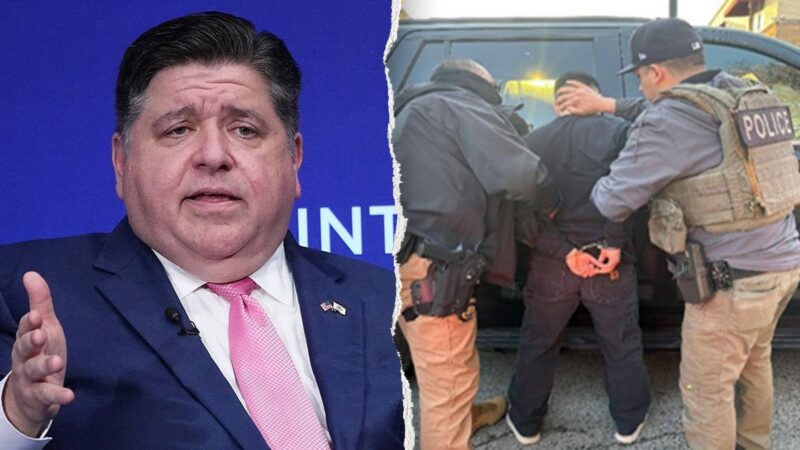
EXCLUSIVE: The Department of Homeland Security lambasted Illinois Gov. JB Pritzker and the state’s refusal to cooperate with ICE after an illegal immigrant convicted of child sexual abuse was released from jail despite calls for state officials to turn him over to federal authorities.

Both Pritzker and Chicago Mayor Brandon Johnson have repeatedly criticized the Trump administration’s immigration enforcement posture, with the mayor comparing President Donald Trump’s America to Jefferson Davis’ Confederacy.

Johnson has accused Trump of “declar[ing] war on Chicago” and using DHS as a “private, militarized, occupying force,” while pledging to fight them in the streets, the legislature and the judiciary. The state operates under the Illinois TRUST Act, a law championed by Springfield Democrats and signed by former Republican Gov. Bruce Rauner that prohibits the use of state and local resources for most civil immigration enforcement purposes.

“Governor Pritzker continues to refuse to do his job to protect his citizens from illegal alien crime and instead chooses to smear our law enforcement,” Assistant Secretary Lauren Bis told Fox News Digital.

NOEM, IN ILLINOIS, CALLS OUT GOV. PRITZKER, CHICAGO’S MAYOR OVER THEIR HANDLING OF CRIMINAL ILLEGAL IMMIGRANTS

“Where is the investigation into his own policies that allowed this pedophile to be released from jail and be loose in Illinois communities?” she added of the Hyatt Hotels heir and potential 2028 Democratic presidential candidate.

Bis called on Pritzker to “end this insanity and stop releasing pedophiles into our communities.”

DHS told Fox News Digital exclusively that ICE officers went to Chicago and arrested Guatemalan national Erik Giovanni-Quiroa, who had been released from jail after his ICE detainer was ignored following a conviction for aggravated sexual abuse of a five-year-old child.

DUFFY GIVES ILLINOIS 30-DAY ULTIMATUM AFTER AUDIT FINDS 1 IN 5 NONCITIZEN TRUCK LICENSES ISSUED ILLEGALLY

Giovanni-Quiroa, who also had a 2011 firearm-battery conviction, was given a three-year sentence on the pedophilia charge but ICE instead encountered him on the streets.

Last week, ICE conducted a targeted vehicle stop and arrested Giovanni-Quiroa after his detainer was denied, forcing agents to locate him themselves.

Officials said Giovanni-Quiroa refused to stop and briefly fled before being placed in federal custody.

Bis said “sanctuary” politicians in Illinois and elsewhere continue to wrongly protect criminal illegal immigrants and allow them to reoffend and perpetrate additional crimes against Americans.

ICE previously called on Illinois law enforcement to begin honoring ICE detainers, as Director Todd Lyons wrote to Attorney General Kwame Raoul noting that DHS says more than 4,000 illegal immigrants are in state custody.

Giovanni-Quiroa illegally entered the U.S. under the second Bush administration and has been essentially a beneficiary of the aforementioned TRUST Act.

In the heat of “Operation: Midway Blitz” in June, Raoul published a memo reiterating key provisions of the law as a “refresher for Illinois law enforcement agencies.”

“It is important to note, however, that although the Illinois TRUST Act prevents the use of state and local resources for civil immigration enforcement purposes, it does not prevent law enforcement officers from taking action to maintain peace and ensure public safety within their jurisdiction,” Raoul wrote.

“Although some provisions of federal immigration statutes are criminal, deportation and removability are matters of civil law, not criminal law [and] whether an individual is lawfully present in the United States is a question of federal civil immigration law.”

Fox News Digital reached out to Raoul for comment on the current case, as well as Pritzker and Johnson.

When Rauner signed the TRUST Act in 2017, he said it would “continue Illinois’ history of welcoming immigrants and help law enforcement focus on stopping violent crime and protecting Illinois residents.”

In that statement, Rauner also cited a federal court decision from the Chicago-based Northern District of Illinois in which an Obama-appointed judge whom President Joe Biden later promoted to an appeals court found flaws in ICE’s detainer process.

Judge John Z. Lee said in his 2019 order in Jimenez-Moreno v. Napolitano that immigration detainer orders exceeded DHS’ statutory authority but he also acknowledged a Philadelphia federal court ruling that ICE detainer requests do not violate the Tenth Amendment as alleged.

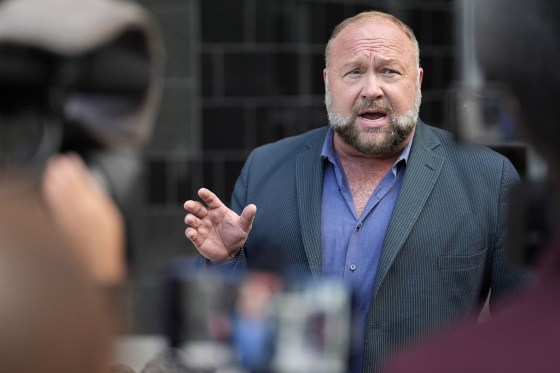
AUSTIN, Texas — The Onion’s plan to take over the Infowars platforms that Alex Jones built into a bullhorn of conspiracy theories and turn them into parody sites was in limbo again Thursday, after a Texas court paused a proposed deal involving the satirical news outlet.

Austin-based Infowars is facing liquidation because of the more than $1 billion in defamation lawsuit judgments Jones owes relatives of victims of the 2012 Sandy Hook Elementary School shooting for calling the Connecticut massacre a hoax. The proposed licensing deal would give The Onion temporary authority to use Infowars’ trademarks, copyrights and intellectual property while a state receiver in Texas works toward liquidation.

A state judge in Austin had scheduled a hearing Thursday on whether to approve The Onion deal with the receiver. But the proceeding fizzled into a status conference because the Texas Third Court of Appeals late Wednesday approved an emergency motion by Jones’ lawyers that temporarily blocked the transfer of any Infowars assets. The judge set another hearing for May 28.

Lawyers for the Sandy Hook families had asked the Texas Supreme Court to overturn the appeals court ruling, but the high court did not issue a decision before Thursday’s hearing.

“This newly insane, unprecedented legal stalling does nothing but delay our deal with the receiver to take control of InfoWars,” Ben Collins, The Onion’s CEO, said in a social media post ahead of the hearing. “We now expect new traps in Alex Jones’ amoral war to deny paying the Sandy Hook families, but we’re freshly surprised by the U.S. legal system’s appetite to put up with it.”

The Onion already has been selling Infowars merchandise on its own website, including T-shirts and tote bags with an Infowars logo that replaces the “o” with its trademark onion image. It wants to turn the Infowars platforms into comedy sites that would include spoofing Jones, conspiracy theories and right-wing talking points, while giving revenue to the Sandy Hook victims’ relatives.

Jones declared victory in videos posted on his social media sites after the appellate court ruling. He called The Onion’s plan illegal, citing pending appeals and his continuing personal bankruptcy case.

“I said days ago there’s no way the Third Circuit Court of Appeals in Texas doesn’t overturn this — you know they’re all Democrats — because it’s so outrageous what you’ve done,” Jones said.

After Thursday’s hearing, Mark Bankston, a lawyer for some of the Sandy Hook victims’ relatives, accused Jones of delaying the liquidation of Infowars numerous times with court filings.

“As far as the world is concerned, Infowars is dead. Everybody knows that,” he said. “He’s trying to keep the bloated corpse of a media organization alive. It’s all a joke. Everybody knows where this is going.”

It’s not the first time The Onion has hit a legal setback in plans to take over Infowars.

In November 2024, the Chicago-based satirical outlet was named the winner of a bankruptcy court auction of the assets of Infowars’ parent company, Free Speech Systems, aimed at helping pay some of the defamation judgments. But a federal judge overturned the auction results, citing problems with process and The Onion’s bid.

Jones said on his show this week that he has a new studio nearing completion. He already has set up a new phone app and websites, including one that sells the dietary supplements, clothing and other merchandise he hawks on his shows. And his personal X account, where he posts videos of his shows and has 4.5 million followers, is not affected by any of the court cases.

On Thursday night, Jones toasted to his crew and viewers during a livestream on X as a clock ticked down to when he said his final moments in the building would hit.

“We’re not here anymore because they’re turning the power off at midnight,” he said.

Market watchers looking for clarity about the direction of Big Tech and the AI investment boom didn’t get much Wednesday afternoon amid a barrage of key earning reports.

Instead, four leading tech companies reported quarterly results that beat Wall Street’s official forecasts but nevertheless fell short of the sky-high expectations investors have set for companies leading the AI revolution.

Investors were most enthusiastic about the results of Google parent Alphabet, whose shares climbed as much as 6% in after-hours trading. The company reported earnings and revenue that beat analysts’ expectations and raised its estimate of how much it would spend on AI infrastructure.

Earnings for Facebook parent Meta were greeted with less fervor. Its shares fell more than 5% after it said it expected revenue growth to stay flat in the second quarter.

Amazon’s and Microsoft’s results and forecasts were more mixed. Investors ultimately sent both lower by about 3%.

The major U.S. stock indexes are sitting near all-time highs despite war with Iran, rising oil prices and dismal consumer sentiment readings.

But overall business investment and consumer spending levels remain resilient — and companies on the S&P 500, the index considered the best proxy for overall stock market performance, are reporting the highest average net profit margins in more than 15 years, according to the analytics group FactSet.

That performance is being led by tech companies known as “The Magnificent 7” — Apple, Microsoft, Alphabet, Amazon, Meta, Nvidia and Tesla, which dictate about one-third of the S&P 500’s average performance.

Tech’s leadership has created a double-edged sword for the market writ large: When times are good in tech, the market tends to rise. When tech’s performance is rockier, the market can sink.

“Stocks are again trading at record highs, reflecting strong investor confidence, but the S&P 500’s heavy concentration in the Mag 7 technology leaders elevates downside risk should earnings fall short, as valuations leave little margin for error,” Chris Brigati, chief investment officer at SWBC, a Texas-based financial group with more than $1 billion in assets under management, said in a note to clients this week.

Investors remain focused on the companies’ projections for future spending levels on the technology and infrastructure underlying their AI programs — and how they square with revenue, Brigati said.

“Each company faces its own dynamics, but delivering tangible results from elevated [capital expenditures] remains the critical test,” he said.

Until the end of March, Mag 7 companies’ performance had been caught in the downdraft that hit the broader market as the war with Iran took hold. Many had already spent much of the second half of 2025 treading water as concerns about the timeline for earnings from AI investments, plus seemingly circular financing arrangements, took hold.

But sometime in early April, investors began to realize that the most important names had been trading at discounts relative to projected earnings, according to Ed Yardeni, an economist and president of Yardeni Research, a widely respected market consultancy.

“I think the perception that there might be an exit ramp for Trump with the war with Iran and ceasefire got investors looking at markets again, and what they suddenly realized is the overall market, and specifically the Mag 7, were a lot cheaper,” Yardeni told NBC News.

In recent days, the market has lost some momentum amid signals that President Donald Trump is planning for a more prolonged conflict. A Wall Street Journal report that ChatGPT maker OpenAI may be on track to miss key revenue and user targets has also slowed tech’s recent momentum. OpenAI investments in — and from — other major tech companies have left it deeply intertwined in the AI boom, and some investors fear any weakness could ripple through parts of the AI ecosystem.

OpenAI called the Journal report “clickbait.”

The actual severity of any shortcomings at OpenAI and how far any weaknesses could spread remain open questions, Yardeni said. For now, cautious investor optimism remains the prevailing sentiment and will most likely continue to power markets higher.

“Concerns about some of the uncertainties, like if these companies are spending too much or if they’ll ever get a proper rate of return, that seems to have gone by the wayside,” he said.

President Donald Trump will be briefed Thursday on options for the way ahead in the Strait of Hormuz and on the ground in Iran, according to a U.S. official familiar with the planning.

Adm. Brad Cooper, the commander of U.S. Central Command, will brief Trump and his senior national security team at the White House, the official said, and update them on the continued U.S. blockade of Iran’s ports.

The update came after energy prices soared to their highest point in years with little sign of a deal to end the war.

Iran’s new supreme leader vowed in a message earlier Thursday that the Islamic Republic would protect its “nuclear and missile capabilities” as national assets.

The defiant written statement, read on state television, was the latest signal that Tehran was not about to capitulate in the standoff wreaking havoc on the global economy.

The price of the international benchmark for oil, Brent crude, rose to more than $126 a barrel at one point overnight — the highest since 2022, when Russia launched its invasion of Ukraine — before falling back to around $114 a barrel early Thursday.

Gas prices in the United States rose to an average of $4.30 a gallon Thursday, also the highest level in nearly four years.

The spike came following an Axios report that the U.S. military was set to brief President Donald Trump on plans for potential military action to help break the deadlock in talks to end the war and reopen the key trade route.

One plan prepared by U.S. Central Command includes a wave of “short and powerful” strikes intended to force Iran back to the negotiating table, Axios reported.

A senior Revolutionary Guard commander vowed swift retaliation if the U.S. does renew its assault.

“With prolonged and wide-ranging painful strikes, we will, by the grace of God, respond to the enemy’s operations even if they are rapid and short,” Seyed Majid Mousavi said on social media Thursday.

“We have seen the fate of your fragile bases in the region; we will also see your warships,” he said.

It comes after Trump warned that Iran had “better get smart soon” as he weighed possible military options to reopen the strait, through which some 20% of the world’s oil passes.

Traffic in the waterway has been at an effective standstill since Iran attacked shipping after the U.S. and Israel launched their joint military assault in late February, rattling the global economy.

Washington launched its own blockade of Iranian ports in response, and Trump told Axios on Wednesday that it would stay in place until Iran agreed to a nuclear deal.

That seemingly rules out a new Iranian proposal to end the war and reopen the strait without resolving the impasse over the Islamic Republic’s nuclear program. Trump said he saw the blockade as “somewhat more effective than the bombing.”

Trump told reporters at the White House on Thursday that the blockade is working well.

“The power of the blockade is incredible. They’re not getting any money from oil, and hopefully it can be worked out very soon,” he said.

Trump added, “Iran is dying to make a deal.”

Trump and other top administration officials met with a group of energy industry executives earlier this week to discuss key issues, including Washington’s possible next steps in continuing the blockade “for months if needed,” a White House official told NBC News.

Members of Trump’s national security team presented him with multiple options this week for how to handle the bottleneck, a U.S. official and a person familiar with the meeting told NBC News. The options discussed included whether the U.S. military presence in the strait should change — either increase or decrease — and whether the military should become more aggressive in conducting operations there, the U.S. official said.

The prospect of prolonged disruption in the strait has sent energy prices soaring despite the ceasefire. “Our world is facing a major economic and energy challenge,” International Energy Agency head Fatih Birol told a conference in Paris.

Federal Communications Commission Chairman Brendan Carr told reporters Thursday that the White House did not push him to order an early review of ABC’s eight broadcast licenses.

“There was no pressure from the outside. There was no suggestion from the outside,” Carr said at a news conference. “There was no call for agency action from the outside. This was based on our assessment of where we were.”

The FCC, which regulates the broadcast industry, announced its early review on Tuesday, a day after President Donald Trump publicly called on ABC to fire late-night host Jimmy Kimmel for a joke he made about first lady Melania Trump last week.

Carr, a Trump appointee who regularly assails the media, reiterated Thursday that the review of ABC’s licenses stemmed from a yearlong investigation into diversity, equity and inclusion practices at Disney, the parent company of ABC.

He insisted the review was not related to “speech” on ABC’s airwaves.

“In this particular case,” Carr told reporters, “this action is driven by investigation into DEI conduct, not any speech at all.” He said he agreed with Sen. Ted Cruz, R-Texas, who earlier this week said he believed the FCC should not act as the “speech police.”

First Amendment advocates sharply criticized the FCC and Carr this week, arguing in part that the agency’s directive to Disney was a clear case of retaliation.

“The FCC may claim these actions are based on DEI policies and have nothing to do with Jimmy Kimmel, but its timing makes it clear these justifications are a fig leaf,” said Bob Corn-Revere, counsel at the Foundation for Individual Rights and Expression.

The White House has blasted Kimmel for describing Melania Trump as an “expectant widow” in a sketch parodying the White House Correspondents’ Association dinner that aired last Thursday.

Two days after the sketch aired, a gunman opened fire outside the correspondents’ association event at a hotel in Washington, forcing the president and the first lady to rush out of the ballroom.

The suspect faces three charges, including attempting to assassinate the president of the United States.

Kimmel defended his remarks Monday, saying in part: “It was a very light roast joke about the fact that he’s almost 80 and she’s younger than I am. It was not by any stretch of the definition a call to assassination.”

Disney has not publicly addressed the furor over Kimmel’s joke, but the media giant confirmed it has received the FCC’s order for a review of the licenses it owns in key media markets such as Los Angeles, New York and San Francisco.

“ABC and its stations have a long record of operating in full compliance with FCC rules and serving their local communities with trusted news, emergency information, and public‑interest programming,” Disney said in a statement on Tuesday.

“We are confident that record demonstrates our continued qualifications as licensees under the Communications Act and the First Amendment and are prepared to show that through the appropriate legal channels,” the corporation added.

The FCC is also investigating DEI practices at Comcast, the parent company of NBC News.

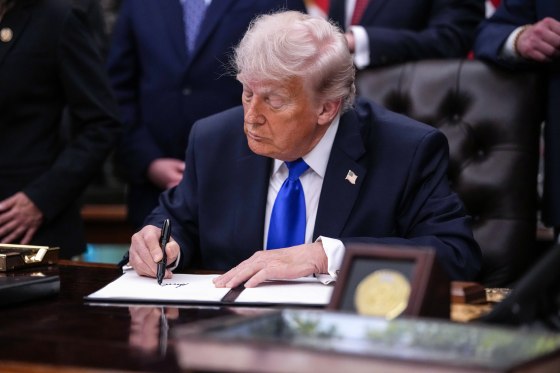
WASHINGTON — President Donald Trump signed an executive order on Thursday calling for a new government website where people in the United States can find and compare private-sector retirement savings accounts, aiming to help millions of workers whose employers do not offer such plans.

The order is intended to help more people gain access to retirement plans before next year, when the federal government will start matching retirement contributions made by lower-income workers.

That new matching contribution, known as the Saver’s Match, comes from 2022 legislation passed under Democratic President Joe Biden. Starting in January, it will offer a match of up to $1,000 for workers who make less than $35,000 a year.

Trump’s order is meant to help make the match available to roughly 50 million people who do not have retirement plans offered by their employers. The Republican president directed the Treasury Department to launch TrumpIRA.gov, where workers will be able to compare private-sector retirement plans.

“For millions of Americans who lack employer-sponsored plans, this will be really revolutionary, because they’ll be covered,” Trump said at an Oval Office signing ceremony.

He is not offering a new government retirement plan but helping match workers with existing plans from private companies.

Details of the order were first reported by the news outlet Semafor.

Trump discussed the idea during his State of the Union address in February, when he noted that about half the people in the country do not have access to employer-provided retirement plans with matching contributions.

“To remedy this gross disparity, I’m announcing that next year my administration will give these often-forgotten American workers — great people, the people that built our country — access to the same type of retirement plan offered to every federal worker,” Trump said.

The Saver’s Match program will offer a maximum match of $1,000 for single filers and $2,000 for married couples who file jointly. The maximum will be limited to single filers earning less than $20,500, with smaller matches offered for those earning up to $35,500. It applies to contributions made toward 401(k) plans, IRAs and Roth IRAs.

Trump said he wants to take the match “to the next level” by asking Congress to expand it to those with incomes higher than $35,000 a year. Kevin Hassett, director of the White House’s National Economic Council, said many middle-income earners also lack access to employer retirement plans.

“We’re working with Congress to significantly expand this program and are looking forward to legislation this year,” Hassett said at the ceremony.

A new law takes effect in Oregon on Friday that forces communications and social media companies to promptly comply with search warrants linked to stalking and domestic violence cases.

The law, believed to be the first of its kind in the country, is named for Kristil Krug, a Colorado woman who was killed in 2023 after an elaborate stalking plot carried out by her husband. He was convicted of her murder last year and sentenced to life in prison.

Krug’s cousin Rebecca Ivanoff lives in Oregon and advocated for the law’s passage there and in Colorado, where she said she’s hopeful it can become law in 2027.

A former prosecutor who specialized in domestic violence cases, Ivanoff has described the legislation as “homicide prevention” and believes her cousin might still be alive had communications companies responded faster to search warrants in Krug’s case.

“Kristil is gone, but there are so many other survivors for whom this would make a difference,” she said in an interview earlier this week.

The new law requires communications companies to respond to warrants in five days and social media companies to respond within 72 hours. In addition to stalking and domestic violence crimes, the companies must also act in cases that involve violations of protective orders in stalking cases.

If the companies fail to comply with the deadlines, Ivanoff said, they can be held in contempt.

There were previously no legal deadlines in Oregon for companies to provide those responses, which often took weeks and sometimes months, according to a state assistant attorney general who testified in support of the bill in February.

Yet the emails, texts and social media messages can be critical to investigations and for victim safety, said the official, Sarah Sabri. Those delays hinder law enforcement and leave victims in a dangerous limbo, she said.

“In domestic violence and stalking cases, time is not neutral,” Sabri said. “Risk can escalate very rapidly.”

Researchers have previously documented the link between stalking and deadly intimate partner violence, with one 2018 study showing that it triples the risk of homicide.

Oregon’s new law “corrects a dangerous gap in the current system,” state Rep. Kevin Mannix, one of the chief sponsors of the legislation, said after it passed unanimously in Oregon’s House of Representatives in February. “This bill recognizes a simple truth: In domestic violence and stalking cases, speed saves lives.”

Speaking before a House committee, Mannix added that while search warrants typically help authorities investigate crimes that have already occurred, Kristil’s Law will allow them to identify stalkers and intervene earlier in the process to prevent violent outcomes.

Mannix said he hopes it will set a precedent across the country.

Local prosecutors praised the legislation. In a statement to NBC News, the president of the Oregon District Attorneys Association said it will “reduce the chance of tragedies like Kristil Krug’s from occurring in Oregon.”

Brant Wolf, executive vice president of the state association that represents telecom companies, said that while its members initially had concerns with the legislation, they reached a satisfactory resolution.

“Our members were happy to work with the proponents of Kristil’s Law to make sure the legislation passed,” he said.

A spokesman for Meta, which owns Facebook, WhatsApp and Instagram, declined to comment. Google did not respond to a request for comment. A spokesperson for the company previously told NBC News that it recognized “the critical importance of maintaining flexibility” in its responses to search warrants.

In Krug’s case, Ivanoff said that her cousin — whom her family described as “a fighter and a true force” — did everything she could to protect herself: She maintained a detailed “stalker log” that she provided to law enforcement, ran drills with her children on what to do if the stalker showed up, installed security cameras and began carrying a handgun.

“And she still got killed,” Ivanoff said.

While Krug was alive, authorities filed search warrants with communications companies that sought information about the increasingly terrifying messages the stalker was sending her, police records show. But those responses didn’t come until after Krug was fatally struck in the head and stabbed in her home on Dec. 14, 2023.

On the day of her death, investigators reached back out to the companies with an emergency request because of the homicide, according to the records. The companies responded within an hour with information that helped authorities determine that the messages had come not from an ex-boyfriend — as the sender made it seem — but from her husband, Daniel Krug.

“Had Kristil had access to that information,” Ivanoff said, “she would have been positioned to know that, quite literally, the call was coming from inside the house, and she could have made a safety plan that never would have allowed him to have the access to her that he did. Law enforcement would have had the evidence they needed to tie him to the stalking and make an arrest.”

Daniel Krug maintained his innocence and was convicted last year of first-degree murder, stalking and criminal impersonation.

Ivanoff said she embarked on her advocacy after a discussion about her cousin’s case with “Dateline” correspondent Josh Mankiewicz last summer. Though Ivanoff had no background in lobbying, her push for Kristil’s Law became reality with bipartisan support after a single five-week session in Oregon’s Legislature, where it was also approved by the state Senate with unanimous support.

Although California and Colorado have recently enacted laws that require social media companies to respond promptly to all search warrants, those laws would have done nothing for Krug, Ivanoff said, because her cousin’s case involved stalking via email and text message.

Though Ivanoff hoped for a quicker deadline in Kristil’s Law — she said she originally wanted companies to respond within in 48 hours — the compromise they landed on recognizes the urgency tied to stalking and domestic violence cases, she said.

Ivanoff told Oregon lawmakers in February that by voting yes, they would ensure her cousin did not die in vain.

If she were here, she would want something positive to come out of what was a horrific experience for our family,” Ivanoff told NBC News. “She would not want any other victims to have to experience what she did, and this is a commonsense solution to a system-based failure. I think she’d be proud of this work.”

Florida congressional candidate Mark Davis sells “8647” T-shirts and hats on his campaign website — the same numerical shorthand to express discontent over President Donald Trump that is central to the case against a former FBI director.

James Comey was indicted on two felony counts Tuesday, on charges that his Instagram post of seashells arranged as the numbers 8647 constituted a threat on the president. Comey maintains his innocence, but the fact that he could face years in prison for this photo raises the question of whether Davis and other buyers and sellers of 8647 merchandise could also be charged with threatening the president.

“Arrest us all. I dare you,” said Davis, an Air Force veteran who wears his 8647 hat proudly around his predominantly conservative neighborhood. “I am done staying quiet. I’ve got a family, I’ve got kids, and I’m watching this country get dragged through chaos while people are going to sit down and shut up. And I am not doing that, and millions of other people aren’t doing it, either.”

Davis’ is just one of hundreds of 8647 products for sale online, ranging from T-shirts and hats to stickers and mugs, available across major e-commerce platforms such as Amazon and Etsy. While Davis, who is a no-party-affiliated candidate, sells his merch for $29.99, similar listings online range in price and style — including a “classic vintage 80s” version for $17.99.

Amazon and Etsy did not immediately respond to requests for comment.

“I think it’s silly. ‘86’ is a restaurant term,” Davis told NBC News. “Some say it’s threatening … but it’s a response to years of intimidation and bulls— from this administration, and I’m just not playing that game.”

And the question of intent is the crux of the argument in such cases. Legal experts told NBC News that the possibility of legal action against buyers and sellers is unlikely because it’s a clear example of protected political speech under the First Amendment and lacks any specific intent to commit violence.

“8647 is not a true threat to the president. ‘86’ means to kick someone out, not kill them,” former federal prosecutor Neama Rahmani said. “It’s possible others get prosecuted, but no judge in the country will find that someone acted intentionally or that they willfully intended to communicate a threat to the president based on 86 alone.”

Rahmani also noted that the indictment against Comey, who has long been a Trump target, could be seen as a personal matter. The Department of Homeland Security previously investigated Comey regarding the post and questioned him by the Secret Service. Separately, Comey was federally indicted last year on suspicion of making false statements to Congress and obstructing congressional proceedings, but those charges were later dismissed.

“I think the case will be dismissed and this will be another embarrassing loss for federal prosecutors,” Rahmani added.

The scrutiny surrounding 8647 has also drawn comparisons to a similar phrase that circulated during President Joe Biden’s term: 8646. That slogan, widely understood as a call to remove Biden from office, appeared in social media posts, including those of far-right political pundit Jack Posobiec, but did not prompt similar legal action. Merchandise with the slogan is still on sale on Amazon and Etsy.

Acting Attorney General Todd Blanche was asked about the double standard Wednesday and whether he would prosecute Posobiec for his posts, which are still on X.

“That’s not how a grand jury does its work. They don’t just look at a single image and then say, ‘OK, yes, we’ll indict,’ or ‘OK, no, we won’t indict.’ They do an investigation,” Blanche said on “CBS Mornings.” “I have no idea whether there was an investigation into the other times that that post has been made and whether that investigation yielded different results. This investigation that we undertook resulted in a two-count indictment.”

He added: “Every day there’s comments made about President Trump, threats made against President Trump. Every one of those are not indicted. It depends on the facts of every case.”

Former federal prosecutor Katie Cherkasky said that the case against Comey hinges on whether prosecutors can prove the post qualifies as a “true threat,” a narrow legal category, and that Comey understood — or consciously disregarded — the risk that it would be taken as “a serious expression of intent to do violence to the president.”

“The defense will argue that ‘86’ carries multiple widely understood meanings, with Merriam-Webster defining it as slang for ejecting, dismissing, or removing, and that ambiguity should resolve in favor of protected speech,” she added.

8646 shirts available on Amazon.

In a May Instagram post after he deleted the seashell photo, Comey said that he assumed the shells he saw on a beach walk were “a political message” and that he “didn’t realize some folks associate those numbers with violence,” adding that he opposed violence “of any kind.”

Unlike hundreds of buyers and sellers of the slogan-bearing hats and T-shirts found online, however, Cherkasky believes prosecutors will argue that Comey is not a random poster but a public figure with an FBI background who is aware of the increasingly polarizing political environment in which there have already been multiple attempts to assassinate Trump.

As the case proceeds, the phrase and the merchandise around it remain in circulation, even as its interpretation is being tested in the court of public opinion and before a federal judge.

For Davis, who is a father of two, the message about wearing and selling merchandise with the slogan is more important than any potential legal concerns. And while he recently took time off from wearing his campaign hat, he now plans to wear the merch every day until his congressional election.

“I am disappointed in America right now, and I’ve never said that. I’ve been in the military. I’m a patriot. I love this country,” Davis added. “This isn’t about being left or right for me. I’m not even a Democrat. This is about people feeling like they’re allowed to speak without getting targeted.”

The Iran war has led to higher prices at the gas pump.

Gas prices in the United States, up more than 30% since the U.S. and Israel launched the war, have soared as the global oil supply constricts.

Now at a national average of more than $4 per gallon, according to data from motor club AAA, this price increase is straining already-stretched budgets in households across the country.

NBC News is tracking gas prices and how they change at the national and state levels, and will be updating this article daily with the latest data.