Author

admin

Browsing

Red Mountain Mining Limited (ASX: RMX, US CODE: RMXFF, or “Company”) a Critical Minerals exploration and development company with an established portfolio in Tier-1 Mining Districts in the United States and Australia, is pleased to announce that it has received continued strong assay results from the second tranche of assays for its auger soil sampling program at the Oaky Creek prospect at the Company’s 100% owned Armidale Antimony-Gold project in New South Wales.

HIGHLIGHTS:

  • Red Mountain has confirmed the presence of multiple drill-ready Antimony targets at the Oaky Creek Prospect following the second batch of analytical results from its comprehensive auger soil sampling program at the Armidale Antimony-Gold Project
  • Newly discovered stibnite vein rock samples return up to an exceptionally high grade of 28.1% Sb. The new samples collected ~600m NNW of the Oaky Creek South workings, highlight the potential for a new extension to the current mineralised system at Oaky Creek
  • Conventional and auger soil sampling and rock analytical results of up to 39.3% Sb and 1.09ppm Au for Oaky Creek indicate the potential of a large-scale orogenic Antimony-gold vein system with a strike extent of ~3km at surface, which is analogous to Larvotto Resources’ Hillgrove project, Australia’s largest known Antimony deposit
  • Previously identified 200m x 30m Antimony-arsenic anomaly near the Oaky Creek South Main Grid has been extended by a further 30% and remains open to the northeast, with values of up to 251ppm Sb and 1,443ppm As returned
  • Soil sampling from southern end of Oaky Creek North has further supported the NNW- trending Antimony anomaly, with values of up to 137ppm Sb and 334ppm As. Aligning with previously identified conventional soil anomaly and mineralised stibnite-bearing rock sampling, providing further evidence for widespread antimony mineralisation at Oaky Creek
  • Results for approximately 900 further auger soil samples collected during January and February are pending and expected to be received before the end of March. These samples will expand auger coverage at both Oaky Creek North and Oaky Creek South, including the newly collected anomalous rock sample, and will be used in conjunction with existing datasets to refine multiple orogenic Antimony vein targets ahead of planned drill-testing
  • Further assays pending for Thompson Falls Antimony Project in the US following recently announced initial high-grade Antimony results

Assay results from the January-February field program across Oaky Creek North and Oaky Creek South have reported numerous highly anomalous samples including a stibnite vein sample collected ~600m NNW of the Oaky Creek South workings returning 28.1% Sb. 42 rock samples now exceed 0.5% Sb at Oaky Creek, further supporting the presence of widespread antimony mineralisation across the Oaky Creek Prospect and potentially indicating an extension to the Oaky Creek South mineralised system (see below).

Results for approximately 900 further auger soil samples collected during January and February remain pending, with assays expected before the end of March. These results will significantly expand coverage at both Oaky Creek North and Oaky Creek South (Figure 1) and will be used in conjunction with datasets for additional expected orogenic antimony vein targets ahead of planned drill testing in Q2 2026.

New Auger Assay Results Extend Antimony-Arsenic Anomaly at Oaky Creek South

As was reported in November 20251, initial auger sampling at the Oaky South Main Grid, located approximately 400m north-northwest of the small historical pits and shafts at Oaky Creek South, defined a coherent NE-striking ~200m x 30m Sb-As anomaly that remained open to the northeast.

Newly received results from sampling completed in late 2025 returned values of up to 251ppm Sb and 1,443ppm As (Appendix 1) and extend this anomaly ~60m further to the northeast (Figure 2). The anomaly remains open in that direction, with analytical results for sampling completed in January and February 2026 pending and represents a priority target for planned drill testing in Q2 2026.

The new results comprise approximately 180 auger soil samples collected over conventional soil anomalies at Oaky Creek South and Oaky Creek North, expanding coverage from the initial ~250 auger samples collected at Oaky Creek South in November 20252 (Figure 1).

Click here for the full ASX Release

This post appeared first on investingnews.com

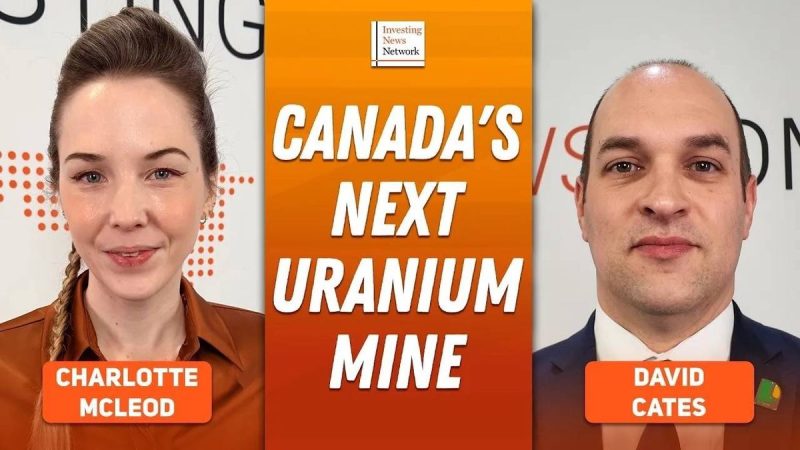
David Cates, president and CEO of Denison Mines (TSX:DML,NYSEAMERICAN:DNN), discusses uranium market dynamics, as well as the company’s path forward after its recent final investment decision for the Phoenix ISR uranium project in Saskatchewan’s Athabasca Basin.

Construction at the asset has begun, with first production planned for mid-2028.

Securities Disclosure: I, Charlotte McLeod, hold no direct investment interest in any company mentioned in this article.

This post appeared first on investingnews.com

(TheNewswire)


Vancouver, British Columbia / March 12, 2026 ‑ TheNewswire – Harvest Gold Corporation (TSXV: HVG,OTC:HVGDF) (‘Harvest Gold‘ or the ‘Company‘) is pleased to announce that it has entered into definitive agreements (the ‘Agreements‘) to acquire 24 additional mineral claims covering 1,356 hectares (the ‘Claims‘) from two separate arm’s length prospector groups in the Urban Barry Greenstone Belt of Quebec.

The block of six (6) claims and four (4) claims to the south are underlain by the Kiask River Deformation Zone and, when combined with Harvest Gold’s LaBelle property, provide continuous coverage over approximately 33 kilometres of strike length of favourable geology south of the Wilson intrusion (see Figure 1).


Click Image To View Full Size

Figure 1: Newly Acquired Mineral Claims

With this acquisition, Harvest Gold’s land position in the highly prospective Urban Barry Greenstone Belt now totals 401 mineral claims covering 21,372.81 hectares and over 50 kilometres of strike length of favorable and potentially mineralized structures, strategically located within the Urban Barry Greenstone Belt (See Figure 2).


Rick Mark, President and CEO of Harvest Gold, states: ‘This expansion enhances our strategic footprint in the Urban Barry Greenstone Belt. Importantly, it connects Mosseau and LaBelle and now covers the entirety of the Kiask River Deformation Zone. Historical results and surface showings from only a small portion of the now expanded Mosseau property underscore the strong exploration potential across the largely underexplored, 100% owned land package.


Strategic Expansion of the Mosseau Project

The Claims acquired by Harvest Gold cover 1,356 hectares in the Urban Barry Greenstone Belt of Quebec. The Claims expand the Company’s Mosseau Project along strike, both to the north and south, incorporating areas of favourable geology with documented historical gold and base metal showings. Historical work documented in the government’s database (SIGEOM) has outlined five (5) additional mineral showings in the north part of the Mosseau property, extending into the Toussaint Deformation Zone and three (3) mineral showings to the south, adjoining the Mosseau and LaBelle properties (Figure 1).

Northern Showings within the Toussaint Deformation Zone include:

  • Domtar 116 (Blueberry): 4.4% Cu, 46.0 g/t Ag, 1.38 g/t Au over 0.18 m (DDH) 

  • Domtar 111 (Beehler Vein): 0.69 g/t Au, 3.09 g/t Ag, 0.22% Cu, 0.23% MoS₂ over 0.61 m (channel sample) and 1.4 g/t Au, 0.86% Cu (grab sample) 

  • Rivière Wilson: 1.0 g/t Au (grab sample) 

  • Verneuil-BV-92-01: 1.23 g/t Au over 0.27 m (DDH) 

  • Verneuil-Serem Est: 1.41 g/t Au over 1.5 m (DDH) 

Southern Showings – Kiask River Deformation Zone

  • Lac Labrie: 47.32 g/t Au over 0.3 m (DDH), 22.3 g/t Au over 0.9 m (DDH), 119.67 g/t Au (float sample) 

  • Labrie 2: 1.65% Zn, 1.11% Pb (grab samples) 

  • Lac Labrie SE: 2.06 g/t Au, 4.46 g/t Ag over 0.61m (DDH) 

The block of six (6) claims and Four (4) claims to the south are underlain by the Kiask River Deformation Zone and, when combined with Harvest Gold’s LaBelle property, provide continuous coverage over approximately 33 kilometres of strike length of favourable geology south of the Wilson intrusion The Audet-Robert claim blocks were purchased from Jean Robert, Les Explorations Carat, 9495-6976 Québec Inc. (the ‘Audet-Robert Vendors‘) and the Gaudreault claim block was purchased from Daniel Gaudreault (the ‘Gaudreault Vendor‘).

Transaction Terms – Audet-Robert Claim Blocks

As consideration for a 100% interest in the Audet-Robert claim blocks, Harvest Gold has agreed to provide the Audet-Robert Vendors with:

  • $60,000 in cash, with $30,000 payable upon receiving TSX Venture Exchange (the Exchange‘) approval to the transaction and $30,000 payable by June 30th, 2026; 

  • 750,000 common shares of the Company (the Shares‘), with one-half (1/2) of the Shares to be issued upon receiving Exchange approval to the transaction and one-half (1/2) of the Shares to be delivered by June 30th, 2026.  The Shares will be subject to a statutory resale restriction period of four months from the date of issuance of the Shares in accordance with Canadian securities laws. 

Transaction Terms – Gaudreault Claim Block

As consideration for a 100% interest in the Gaudreault claim block, Harvest Gold will provide the Gaudreault Vendor with $5,000 in cash.

No finder’s fees are payable in connection with the transactions.

The Agreements remain subject to regulatory approval by the Exchange.

NI 43-101 Disclosure – Historical Data

The historical exploration results referenced in this news release were completed by previous operators and have not been independently verified by Harvest Gold. Although the Company considers the historical work to be relevant and reliable, it has not completed sufficient work to verify these historical results and does not rely on them for the purposes of this disclosure. The historical information is presented solely to provide context for current exploration results and ongoing exploration planning.

The true widths of the reported historical drill and channel sampling intervals have not been determined. Grab samples are selective by nature and may not be representative of the overall mineralization on the Mosseau Project.


Qualified Person Statement

All scientific and technical information in this news release has been prepared and approved by Louis Martin, P.Geo., Technical Advisor to the Company and considered a Qualified Person for the purposes of NI 43-101.

Mr. Martin has reviewed and verified the historical assay results reported in SIGEOM and has not identified any errors or omissions during the data verification process. The Company and Mr. Martin are not aware of any factors related to sampling or recovery that could materially affect the accuracy or reliability of the historical data disclosed herein.

About Harvest Gold Corporation

Harvest Gold is focused on exploring for near-surface gold deposits and copper-gold porphyry deposits in politically stable mining jurisdictions. Harvest Gold’s board of directors, management team and technical advisors have collective geological and financing experience exceeding 400 years.

Harvest Gold has three active gold projects focused in the Urban Barry area, totalling 401 claims covering 21,372.81 ha, located approximately 45-70 km west of Gold Fields Limited’s – Windfall Deposit (Figure 2).

Harvest Gold acknowledges that the Mosseau Gold Project straddles the Eeyou Istchee-James Bay and Abitibi territories.  Harvest Gold is committed to developing positive and mutually beneficial relationships based on respect and transparency with local Indigenous communities.

Harvest Gold’s three properties, Mosseau, Urban-Barry and LaBelle, together cover over 50 km of favourable strike along mineralized shear zones.


Click Image To View Full Size

Figure 2: Project Location: Urban-Barry Greenstone Belt


ON BEHALF OF THE BOARD OF DIRECTORS

Rick Mark
President and CEO
Harvest Gold Corporation

For more information please contact:

Rick Mark or Jan Urata
@ 604.737.2303 or
info@harvestgoldcorp.com

Neither TSX Venture Exchange nor its Regulation Services Provider (as that term is defined in the policies of the TSX Venture Exchange) accepts responsibility for the adequacy or accuracy of this release.

Forward Looking Information

This news release includes certain statements that may be deemed ‘forward looking statements’. All statements in this news release, other than statements of historical facts, that address events or developments that Harvest Gold expects to occur, are forward looking statements. Forward looking statements are statements that are not historical facts and are generally, but not always, identified by the words ‘expects’, ‘plans’, ‘anticipates’, ‘believes’, ‘intends’, ‘estimates’, ‘projects’, ‘potential’ and similar expressions, or that events or conditions ‘will’, ‘would’, ‘may’, ‘could’ or ‘should’ occur.

Although the Company believes the expectations expressed in such forward-looking statements are based on reasonable assumptions, such statements are not guarantees of future performance and actual results may differ materially from those in the forward-looking statements. Factors that could cause the actual results to differ materially from those in forward looking statements include market prices, exploitation and exploration successes, and continued availability of capital and financing, and general economic, market or business conditions. Investors are cautioned that any such statements are not guarantees of future performance and actual results or developments may differ materially from those projected in the forward-looking statements. Forward looking statements are based on the beliefs, estimates and opinions of the Company’s management on the date the statements are made. Except as required by securities laws, the Company undertakes no obligation to update these forward-looking statements in the event that management’s beliefs, estimates or opinions, or other factors, should change.

Copyright (c) 2026 TheNewswire – All rights reserved.
News Provided by TheNewsWire via QuoteMedia

This post appeared first on investingnews.com

NOT FOR DISTRIBUTION TO UNITED STATES NEWS WIRE SERVICES OR FOR DISSEMINATION IN THE UNITED STATES.

Lahontan Gold Corp. (TSXV:LG,OTC:LGCXF, OTCQB:LGCXF, FSE:Y2F) (the ‘Company’ or ‘Lahontan’) is pleased to announce that it intends to complete a non-brokered private placement of up to 24,390,244 units (each, a ‘Unit’) in the capital of the Company at a price of Cdn $0.41 per Unit for gross proceeds of up to Cdn $10,000,000 (the ‘Offering’).

Each Unit shall be comprised of one common share (each, a ‘Common Share‘) in the capital of the Company and one-half of one whole Common Share purchase warrant (each whole warrant, a ‘Warrant‘). Each Warrant entitles the holder thereof to purchase one Common Share at a price of Cdn $0.60 per Common Share for a period of two (2) years from the date of issuance, provided, however, that should the closing price at which the Common Shares trade on the TSX Venture Exchange (or any such other stock exchange in Canada as the Common Shares may trade at the applicable time) is equal to or exceeds Cdn $1.00 for ten (10) consecutive trading days at any time following the date that is four months and one day after the date of issuance, the Company may accelerate the Warrant Term (the ‘Reduced Warrant Term‘) such that the Warrants shall expire on the date which is 30 business days following the date a press release is issued by the Company announcing the Reduced Warrant Term.

Gross proceeds raised from the Offering will be used for general working capital purposes and for exploration at the Company’s Santa Fe Mine and West Santa Fe Projects.

All securities issued in connection with the Offering will be subject to a hold period of four months plus a day from the date of issuance and the resale rules of applicable securities legislation. Subject to compliance with applicable regulatory requirements, all securities to be issued pursuant to the Offering in jurisdictions outside of Canada and the United States pursuant to Ontario Securities Commission Rule 72-503 – Distributions Outside Canada will not be subject to any statutory hold period under applicable Canadian securities laws. The closing of the Offering is subject to certain conditions including, but not limited to, the receipt of all necessary regulatory and other approvals, including the approval of the TSX Venture Exchange.

This press release does not constitute an offer to sell or a solicitation of an offer to buy the securities in the United States. The securities have not been and will not be registered under the United States Securities Act of 1933, as amended (the ‘U.S. Securities Act‘) or any state securities laws and may not be offered or sold within the United States or to U.S. Persons as defined under applicable United States securities laws unless registered under the U.S. Securities Act and applicable state securities laws or an exemption from such registration is available.

About Lahontan Gold Corp.

Lahontan Gold Corp. is a Canadian mine development and mineral exploration company that holds, through its US subsidiaries, four gold and silver exploration properties in the Walker Lane of mining friendly Nevada. Lahontan’s flagship property, the 28.3 km2 Santa Fe Mine project, had past production of 359,202 ounces of gold and 702,067 ounces of silver between 1988 and 1995 from open pit mines utilizing heap-leach processing. The Santa Fe Mine has a Canadian National Instrument 43-101 compliant Indicated Mineral Resource of 1,539,000 oz Au Eq (48,393,000 tonnes grading 0.92 g/t Au and 7.18 g/t Ag, together grading 0.99 g/t Au Eq) and an Inferred Mineral Resource of 411,000 oz Au Eq (16,760,000 grading 0.74 g/t Au and 3.25 g/t Ag, together grading 0.76 g/t Au Eq), all pit constrained (Au Eq is inclusive of recovery, please see Santa Fe Project Technical Report and note below*). The Company plans to continue advancing the Santa Fe Mine project towards production, update the Santa Fe Preliminary Economic Assessment, and drill test its satellite West Santa Fe project during 2025. For more information, please visit our website: www.lahontangoldcorp.com

* Please see the ‘Preliminary Economic Assessment, NI 43-101 Technical Report, Santa Fe Project’, Authors: Kenji Umeno, P. Eng., Thomas Dyer, PE, Kyle Murphy, PE, Trevor Rabb, P. Geo, Darcy Baker, PhD, P. Geo., and John M. Young, SME-RM; Effective Date: December 10, 2024, Report Date: January 24, 2025. The Technical Report is available on the Company’s website and SEDAR+. Mineral resources are reported using a cut-off grade of 0.15 g/t AuEq for oxide resources and 0.60 g/t AuEq for non-oxide resources. AuEq for the purpose of cut-off grade and reporting the Mineral Resources is based on the following assumptions gold price of US$1,950/oz gold, silver price of US$23.50/oz silver, and oxide gold recoveries ranging from 28% to 79%, oxide silver recoveries ranging from 8% to 30%, and non-oxide gold and silver recoveries of 71%. 

Qualified Person

Brian J. Maher, M.Sc., CPG-12342, is a ‘Qualified Person’ as defined under Canadian National Instrument 43-101, Standards of Disclosure for Mineral Projects, and has reviewed and approved the content of this news release in respect of all technical disclosure other than the Mineral Resource Estimate as noted above.‎ Mr. Maher is Vice President-Exploration for Lahontan Gold and has verified the data disclosed in this news release, including the sampling, ‎‎analytical and test data underlying the disclosure.

On behalf of the Board of Directors

Kimberly Ann

Founder, CEO, President, Executive Chair

FOR FURTHER INFORMATION, PLEASE CONTACT:

Lahontan Gold Corp.

Kimberly Ann
Founder, CEO, President, Executive Chair

Phone: 1-530-414-4400

Email:
Kimberly.ann@lahontangoldcorp.com

Website: www.lahontangoldcorp.com

Cautionary Note Regarding Forward-Looking Statements:

Neither TSX Venture Exchange nor its Regulation Services Provider (as that term is defined in policies of the TSX Venture Exchange) accepts responsibility for the adequacy or accuracy of this release. Except for statements of historical fact, this news release contains certain ‘forward-looking information’ within the meaning of applicable securities law. Forward-looking information is frequently characterized by words such as ‘plan’, ‘expect’, ‘project’, ‘intend’, ‘believe’, ‘anticipate’, ‘estimate’ and other similar words, or statements that certain events or conditions ‘may’ or ‘will’ occur. Forward-looking statements are based on the opinions and estimates at the date the statements are made and are subject to a variety of risks and uncertainties and other factors that could cause actual events or results to differ materially from those anticipated in the forward-looking statements including, but not limited to delays or uncertainties with regulatory approvals, including that of the TSXV. There are uncertainties inherent in forward-looking information, including factors beyond the Company’s control. The Company undertakes no obligation to update forward-looking information if circumstances or management’s estimates or opinions should change except as required by law. The reader is cautioned not to place undue reliance on forward-looking statements. Additional information identifying risks and uncertainties that could affect financial results is contained in the Company’s filings with Canadian securities regulators, which filings are available at www.sedar.com.

News Provided by GlobeNewswire via QuoteMedia

This post appeared first on investingnews.com

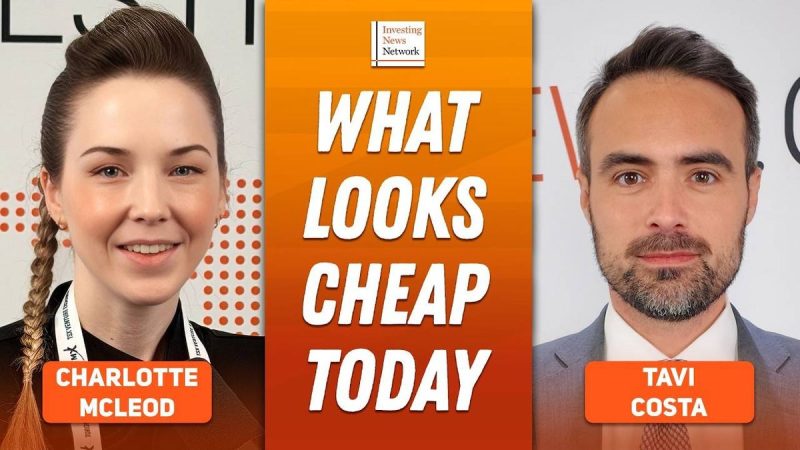
Tavi Costa, CEO of Azuria Capital, explains where he’s looking to deploy capital right now, mentioning mining, energy and emerging markets.

‘When I apply macro analysis into markets, there’s a few things that look exceptionally cheap today that could be extremely asymmetric,’ he commented.

‘Again, I could be wrong in three of them, but if I get one right it’s going to go up.’

Securities Disclosure: I, Charlotte McLeod, hold no direct investment interest in any company mentioned in this article.

This post appeared first on investingnews.com

Canada is a premier destination for mineral exploration and mining, but the nation’s exploration-stage companies are still struggling to attract investment dollars.

The country’s appeal is showcased in the Fraser Institute’s most recent Annual Survey of Mining Companies, which tracks the investment attractiveness of global mining jurisdictions. It places the Canadian provinces of Ontario and Saskatchewan among the world’s top mining jurisdictions, behind only Nevada.

The Canadian mining industry “serves as a proxy for the global (mining) industry” as it is home to “the largest concentration of public mineral companies in the world,” with Toronto at “the center of the mining finance universe,” said Douglas Silver, partner and senior advisor at Benwerrin Investment Partners, during his presentation at this year’s Prospectors & Developers Association of Canada (PDAC) convention, held last week.

Jeff Killeen, director of policy and programs for PDAC, shared similar sentiments in his own presentation, telling conference attendees, “Almost 30 percent of every dollar raised somewhere in the world for the (mining) sector comes through the Canadian marketplace: the TSX, the Venture and the CSE.”

Canada’s unique tax incentives crucial for mining investment

Canada owes its leading position in the global mining industry to its large landmass and abundance of natural resources. However, both Silver and Killeen pointed out that the nation’s flow-through share tax incentive — unique to Canada — is also “incredibly critical” to the success of the natioin’s mining sector.

Flow-through shares are a highly specialized financing tool that allow resource companies to transfer eligible exploration and development expenses to investors, who then deduct them from their own taxable income.

Under the Mineral Exploration Tax Credit (METC), funds generated from this type of capital raise must be put into a project within 18 months. There’s also the Critical Mineral Exploration Tax Credit (CMETC), which applies to critical minerals used for batteries and magnets, including rare earths, nickel, uranium, lithium and graphite, among others.

Generational shift shrinking pool of mining investors

Although Canada dominates the global mining finance sector and is teeming with multiple types of mineral deposits, it’s becoming increasingly difficult for the nation’s exploration-stage companies to attract investment dollars.

The tight financial landscape for today’s explorers stems in part from both a complex regulatory system that limits the areas open to mining activity, and a lack of proper infrastructure in the more remote regions of the country. Both of these shortcomings strike at the heart of perceived jurisdictional risk for both retail and institutional investors.

During his presentation, Killeen highlighted a few of the key financing trends affecting access to capital in the mineral industry, noting that last year saw a dramatic uptick in investment in the mining sector.

Where is capital originating from? Most of it was equity raised through private placements, which poses a problem as it represents a very narrow investor base that consists of friends and family of the management team and strategic investors that probably already own shares in the company.

“That just tells us that we’re not broadening the investor base. We’re not pulling in more investors. There’s no more new retail folks coming in investing in shares in Canada. This tells us that we’re in a very risky balance in terms of who actually can fund the sector through the next generation,” he warned the PDAC audience.

“There is a lesser population of retail investors as time goes on. You know that the Boomer generation is going away in terms of an investment pool, and the next generation isn’t necessarily replicating that.”

Silver also views the generational shift in the investment landscape as a problem for raising money in the mining industry. “There’s no question from what I’ve read and heard that the younger generations don’t pick individual stocks. They tend to lean towards ETFs or crypto or other stuff,” he said. “Crypto is definitely competing with mining.”

Gold grabbing all the dollars

Canada’s minerals industry did experience a strong rebound in terms of equity investment in 2025, but it was heavily targeted at producers and developers with large-scale, near-production projects. Gold dominated, but investment also increased in projects associated with critical minerals like lithium, nickel, copper and graphite.

“How much is going to the bottom end, to those sub-$100 million market cap companies, the lion’s share of the junior explorers that are out there? Well, in the Canadian marketplace, only about 10 percent of every dollar raised is getting down to those size of companies,” explained Killeen, highlighting the discrepancy.

In his view, the lack of investment over the past decade is bringing about a decline in grassroots exploration.

Gold is grabbing many mineral investment dollars, not only because its price is surging to unprecedented highs, but also because there’s a faster return on investment compared to other metals. Killeen said that’s due to the fact that gold mining doesn’t require large amounts of infrastructure such as railways and ports.

“In some cases, you don’t need roads. The capital to develop a gold mine might be one-sixth of, one-10th of or one-20th of a copper mine or a zinc mine,” he commented. “So the rate of return for the average investor who’s looking at an exploration stock saying, ‘Could I get money back into this? Could I get value back into this?’ Today that timeframe is much shorter, and the capital to bring it to market is much lower.”

Looking at copper, which is much more capital intensive, Killeen said production is down nearly 30 percent from seven or eight years ago. Reserves are also down, even though rising copper prices have resulted in more resources being upgraded to reserves. Silver agreed with that take — his research shows that the Canadian mining industry is overflowing with gold companies. Of the 1,555 mining companies in Canada in 2024, 42 percent of them were gold-focused firms compared to only 17 percent for copper, the second highest amount.

“So why do we have so many gold companies? I think the answer is pretty obvious to me, which is if you want to build a porphyry copper mine, you’ve got to go raise $5 (billion) or $10 billion,” said Silver. “That’s very difficult in the mining industry, because we just don’t have that much gross capital available to us relative to what some of the other industries have … but you can build a gold mine for a couple hundred million (dollars).’

Despite the massive focus on gold, Killeen and Silver both noted that Canada is actually seeing increasing exploration activity for rare earths, lithium, cobalt, graphite and uranium.

Improving the investment case for Canada’s juniors

Killeen said PDAC and its members are pushing for the Canadian government to make the METC and CMETC permanent to bring more investment into mineral exploration in greenfield regions and making new discoveries.

Last year, flow-through shares generated C$1.6 billion in investment into the sector, according to Silver’s research, or about 76 percent of funding received by mineral exploration companies in Canada.

“When you look at the role of Canadian flow through, it’s so incredibly critical to Canadian mining,” he said. Silver too is advocating for the mining industry and investors to “fight for flow through way more than you do.’

To address infrastructure challenges for bringing critical metals projects into production sooner for a quicker return on investment, Killeen suggested more pension funds investing in Canada and easing government regulations.

“We need them cooperating together with the federal government to develop major infrastructure that doesn’t exist beyond 100 kilometers from the border,” he said.

Killeen noted that “the world is changing” and governments, including Canada’s, are becoming more focused on securing domestic sources of critical minerals. For example, at PDAC, Tim Hodgson, Canada’s minister of energy and natural resources, announced a C$3.6 billion suite of investments targeting the critical minerals sector.

Securities Disclosure: I, Melissa Pistilli, hold no direct investment interest in any company mentioned in this article.

This post appeared first on investingnews.com

Silver mining companies are being supported by a silver price bull run in 2026.

After climbing through 2025, silver broke its all-time high set in 1980 in October before reaching a new high of US$121.62 per ounce on January 29.

The factors driving the metal’s rise remain, most notably tightening supply and demand fundamentals driven by higher demand from industrial sectors and its use in photovoltaics.

Additionally, prices have found tailwinds from safe-haven investors who find silver’s lower entry price compared to gold appealing. They have moved toward silver on the back of uncertainty in global financial markets as the US implements tariff policies, as well as escalating tensions in the Middle East and the unresolved conflict between Russia and Ukraine.

Below is an overview of the five largest silver-mining stocks by market cap as of February 26, 2026, as per TradingView’s stock screener. Read on to learn more about the activities and operations of these large-cap silver stocks.

1. Pan American Silver (TSX:PAAS,NYSE:PAAS)

Market cap: C$37.1 billion
Share price: C$92.37

Pan American Silver is among the world’s largest primary silver producers, with silver assets located throughout the Americas and operations in Peru, Mexico, Bolivia, Argentina and Chile. Its largest wholly owned silver-producing asset is its La Colorada mine in Mexico.

Pan American also has a 44 percent stake in the Juanicipio mine in Central Mexico following its US$2.1 billion acquisition of MAG Silver that closed in September 2025. The mine is operated by Fresnillo (LSE:FRES), which holds the remaining 56 percent.

According to Pan American’s Q4 and full year 2025 report, its operations produced a record 7.28 million ounces of attributable silver in Q4 boosted by the addition of the Juanicipio mine. Juancipio is now the company’s biggest silver producer, producing 1.91 million ounces of attributable silver in Q4.

The La Colorada mine was the second highest contributor at 1.61 million ounces of silver. Other significant contributions came from the El Peñon gold-silver mine in Chile at 1.06 million ounces of silver, Cerro Moro in Argentina at 920,000 ounces, Huaron in Peru at 780,000 ounces and San Vicente in Bolivia at 760,000 ounces.

For the full year, Pan American produced 22.8 million ounces of attributable silver, coming in above its annual guidance. The company also provided guidance for 2026, estimating production of 25 million to 27 million ounces of attributable silver and all-in sustaining costs for its silver segment of US$15.75 to US$18.25 per ounce.

2. First Majestic Silver (TSX:AG,NYSE:AG)

Market cap: C$19.75 billion
Share price: C$42.59

First Majestic Silver has three wholly owned silver-producing mines in Mexico: San Dimas in Durango, Santa Elena in Sonora and La Encantada in Coahuila. The first two produce gold as well.

Additionally, the company holds a 70 percent stake in the Los Gatos silver mine in Chihuahua, which also produces zinc, lead and gold as byproducts. First Majestic acquired the property in January 2025 through a merger with Gatos Silver; Japan’s Dowa Holdings (TSE:5714) owns the remaining 30 percent.

On top of its mining operations, First Majestic mints and sells silver bullion from its First Mint facility in Nevada, US. The company commenced sales in March 2024.

According to its full year 2025 production report, First Majestic achieved record Q4 silver production of 4.17 million ounces of silver, a 77 percent year-over-year increase from 2.35 million ounces.

First Majestic’s Los Gatos mine was its largest producer, delivering 1.49 million attributable ounces of silver during the quarter. San Dimas took second place at 1.32 million ounces, while La Encantada and Santa Elena produced 1 million ounces and 358,185 ounces, respectively.

On a yearly basis, First Majestic produced 15.44 million ounces of silver, near the upper end of its guidance. The company set guidance for 2026 at 13 million to 14.4 million ounces of silver, with silver equivalent all-in sustaining costs at US$26.15 to US$27.91 per ounce.

3. Endeavour Silver (TSX:EDR,NYSE:EXK)

Market cap: C$5.33 billion
Share price: C$19.17

Endeavour Silver is a mining company with operations in Mexico and Peru.

In Mexico, Endeavour has two operating silver-gold mines — Guanaceví mine and Terronera — as well as a portfolio of exploration projects that includes the advanced Pitarilla silver project. The company achieved commercial production at Terronera in October 2025.

In Peru, the company owns the Kolpa silver mine, which also produces zinc, lead and copper. It acquired the Peruvian mine’s owner Compañia Minera Kolpa in May 2025 for total consideration of US$145 million in a combination of cash and shares. Endeavour also agreed to pay up to US$10 million in cash in contingent payments if certain events are met.

In its Q4 and full year 2025 results, Endeavour reported Q4 silver production of 2.03 million ounces, up 146 percent year over year. For the full year, Endeavour produced 6.49 million ounces of silver, a 45 percent increase over its production of 4.47 million in 2024.

Much of these gains were driven by new production from Kolpa and Terronera, which contributed 631,867 and 352,002 ounces of silver respectively in Q4. Kolpa delivered 1.61 million ounces during its eight months of ownership in 2025.

A large portion of the increase was due to the acquisition of Kolpa, which

The company also noted that it achieved commercial production at Terronera in October 2025, delivering 352,002 ounces of silver in the final quarter of the year. Another 608,388 ounces of silver were produced at its Bolanitos mine in Mexico in 2025.

On January 15, Endeavour announced it had completed the sale of the mine to Guanajuato Silver for upfront consideration of US$40 million, with additional payments to be made upon meeting production milestones at the mine.

4. Silvercorp Metals (TSX:SVM,NYSEAMERICAN:SVM)

Market cap: C$3.96 billion
Share price: C$18.84

Silvercorp Metals is a production and development company operating two silver mines in China: the Ying Mining District in Henan and the GC mine in Guangdong. It is also working to develop the copper primary El Domo project in Central Ecuador.

In the company’s operations report for its fiscal Q3 2026 ended December 31, Silvercorp reported total silver production for the quarter of 1.9 million ounces, a 4 percent decrease from the same period last year. The majority of its output came from the Ying Mining District, which delivered approximately 1.7 million ounces of silver, with about 100,000 ounces coming from the GC mine, according to the release.

It is constructing the Kuanping project as a satellite deposit for Ying, at which it expects to see minor development ore production beginning in June. In addition to mining activities, the company reported 76,607 meters of exploration drilling and 19,917 meters of tunnelling across Ying and GC.

On February 4, Silvercorp announced that the construction budget for its El Domo project had been increased by US$44 million to US$284 million. The largest component of the rise at US$16 million was an increase in the VAT rate from 10 percent to 15 percent; the company expects to recover the funds through tax credits in the first year of operation.

Silvercorp detailed its 2025 progress at El Domo in the release, which included moving over 2.6 million cubic meters of material for site preparation.

5. Americas Gold and Silver (TSX:USA,NYSEAMERICAN:USAS)

Market cap: C$3.34 billion
Share price: C$12.90

Americas Gold and Silver is a US and Mexico-focused silver producer. Its primary operations consist of the Galena Complex in Idaho, US, and the Cosala operations in Sinaloa, Mexico.

Americas is one of the largest primary silver miners in the US due to its Galena Complex in Nevada’s Silver Valley, a historic mining district that is home to the Bunker Hill, Sunshine and Lucky Friday mines. In addition to silver, Galena produces antimony and copper byproducts. In February, the company announced plans to build an antimony processing facility at the complex through a 51 percent owned joint venture.

In late 2025, Americas Gold and Silver completed a two phase plan to increase efficiency at the mine’s No. 3 shaft. The first phase upgraded the hoisting capacity from 40 to 80 metric tons per hour of material movement, while phase two included upgrades to the hoist pads, the installation of a hoist control console and the deployment of an antenna system in the shaft to support upgrades to automation.

The Cosala operations in Sinaloa comprise 67 mining concessions spanning 19,385 hectares and include the Los Braceros processing facility, the San Rafael mine and the EC120 mine. While San Rafael contains higher levels of zinc and lead, EC120 hosts higher grades of silver and copper. EC120 entered commercial production on January 1, 2026, as the company transitions its operations away from San Rafael.

In December, Americas Gold and Silver completed its acquisition of the past-producing Crescent silver mine, located 9 miles from the Galena Complex in Idaho. The company plans to restart production at the fully permitted mine, which produced more than 25 million ounces of silver between 1917 and 1981. Feedstock from the mine will be delivered to the milling site at the Galena Complex.

The company said it is fully funded and will rapidly advance Crescent to production, while also carrying out aggressive exploration programs at both sites.

On January 21, Americas announced it achieved record production from its Cosala operations, coming in at 1.19 million ounces of silver in 2025 and 463,000 ounces in Q4 alone.

Its combined full year silver production of 2.65 million ounces was up 52 percent over the 1.17 million attributable ounces it delivered in 2024, in part due to the company increasing its stake in Galena from 60 to 100 percent to end 2024.

FAQs for silver investing

Is silver a good investment?

Silver comes with many of the same advantages as its sister metal gold. Both are considered safe-haven assets, as they can offer a hedge against market downturns, a weakening US dollar and inflation.

Additionally, many investors like being able to physically own an asset, and with its lower price point, buying silver coins and bars is an accessible option for building a precious metals portfolio. Of course, physical silver isn’t the only way to invest in the metal — there are also silver stocks and various silver exchange-traded funds.

It’s up to investors to do their due diligence and decide whether silver is the right match for their portfolio.

Does silver go up when the stock market goes down?

Historically, silver has shown some correlation with stock market moves, although it’s not consistent. When the stock market has seen its worst crashes, silver has moved down, but by a less significant amount than the stock market has, showing that it can act as a safety net to lessen losses in tough circumstances.

However, silver is also known for its volatility. What’s more, because it has industrial applications as well as a currency side, silver is less tied to the stock market than gold is.

Securities Disclosure: I, Dean Belder, own shares of Vizsla Silver.

This post appeared first on investingnews.com

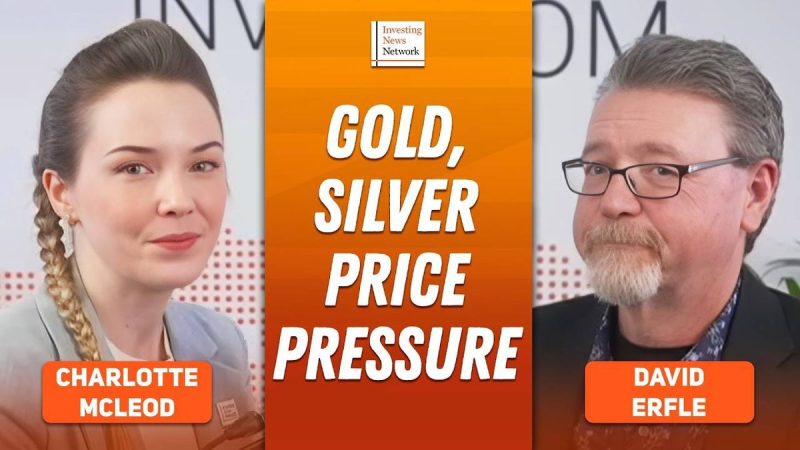
David Erfle, editor and founder of Junior Miner Junky, explains why gold and silver prices took a hit not long after war in the Middle East was announced.

While the near term could be volatile, he said the long-term outlook for precious metals is strong.

Securities Disclosure: I, Charlotte McLeod, hold no direct investment interest in any company mentioned in this article.

This post appeared first on investingnews.com

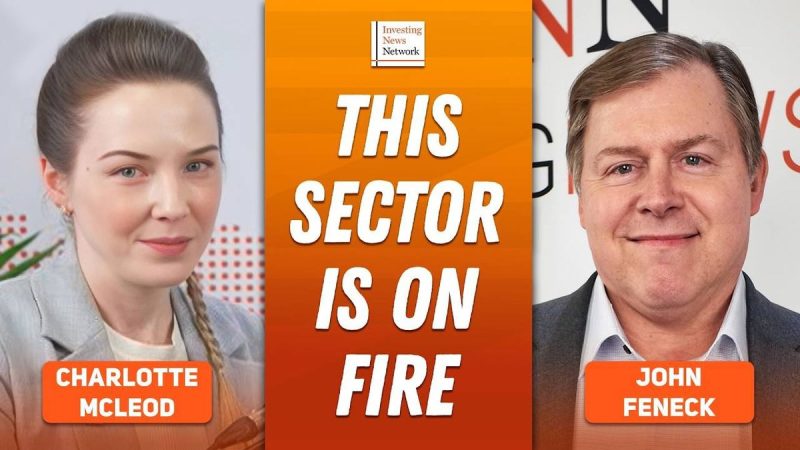
John Feneck, portfolio manager and consultant at Feneck Consulting, explains why he expects gold and silver prices to retest January’s highs, noting that he sees investors beginning to rotate away from the tech sector and toward commodities.

‘This sector is on fire, this sector will continue to rally.’

Securities Disclosure: I, Charlotte McLeod, hold no direct investment interest in any company mentioned in this article.

This post appeared first on investingnews.com